Human impacts on fire history and forest structure over 1300 years in the Sierra Nevada

Human impacts on fire history and forest structure over 1300 years in the Sierra Nevada

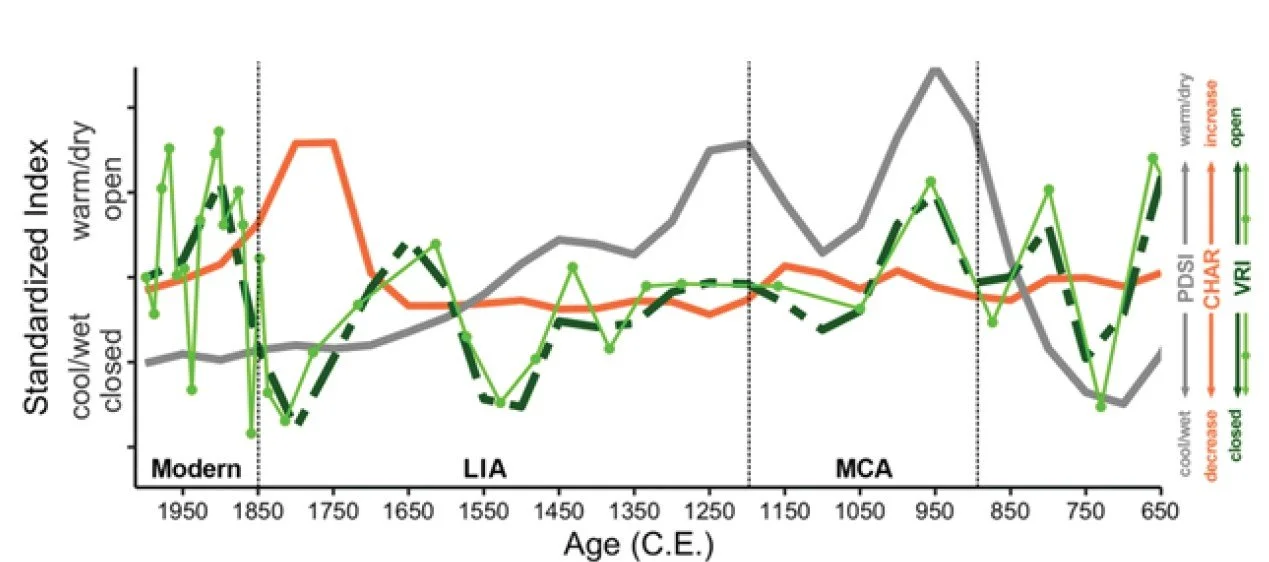
The increased frequency of large, destructive wildfires in the Sierra Nevada has been in part driven by historical management decisions that have altered the structure of forests, creating dense stands dominated by shade tolerant species with thick, flammable understory fuels. Prior to European settlement c. 1850 and the onset of fire suppression policies, abundant archaeological evidence suggests that Indigenous groups occupying the Sierra National Forest (SNF) set frequent, low-intensity fires to maintain “park-like” woodlands with clear travel corridors, productive food and game forage patches, and culturally-important plant materials such as basket-weaving grasses and oak acorns. The history of frequent fire in the SNF has been documented in the paleorecord over at least the past 1700 years as fire scars on tree rings. To this point, this fire history and coincident and subsequent shifts in forest structure have been largely attributed to climate and lightning trends rather than anthropogenic causes, even though Native Americans occupied the area since at least 6000 B.C.E. This discrepancy may be partly due to the low-intensity, slow-moving nature of Indigenous burning, potentially reducing the likelihood of scarring trees and producing sedimentary charcoal. Partitioning the effects of human vs. climatically-induced fire on Sierra Nevada forests over time is essential for understanding baseline forest structures pre-fire suppression and guiding modern restoration.

View Research Brief

View Article (Open Access)

Read More

Drivers of fire severity in three short-interval successive fires in the Sierra Nevada, California

Drivers of fire severity in three short-interval successive fires in the Sierra Nevada, California

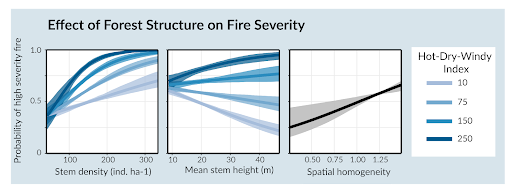
In the mixed conifer forests of the Sierra Nevada, long-term fire exclusion has increased fuel loads and stem densities while fundamentally altering species compositions and other stand metrics relative to historical estimates. These stand conditions, along with hotter, drier, and longer fire seasons, have created increasingly large and severe wildfires across the western United States, with many areas experiencing successive reburns. Given the growing number of challenges faced by managers to increase forest resilience to future wildfires, it is crucial to understand the implications of reintroducing repeated fire into fire-excluded landscapes, and to assess the capacity of successive low-to-moderate severity fires to restore forests to resilient structural parameters.

Researchers at UC Berkeley and the US Forest Service sought to evaluate the influence of forest structure and composition, topography, and weather on fire severity in a third successive fire. They investigated the structural conditions emerging after successive burns, whether these conditions contributed to fire severity, and how these conditions compared to historical estimates. Their study utilized a network of Forest Service field plots in the Plumas and Lassen National Forests that had been initially burned in the Storrie and Rich Fires in 2000 and 2008, reburned in the Chips Fire in 2012, and were then subject to a second reburn in the 2021 Dixie Fire. Plots were sampled in 2017 and 2018 following the Chips Fire and in 2023 following the Dixie Fire.

View Research Brief

View Article (Open Access)

Read More

Drought and insect outbreaks alter fuel and potential fire behavior in two California forest types

Drought and insect outbreaks alter fuel and potential fire behavior in two California forest types

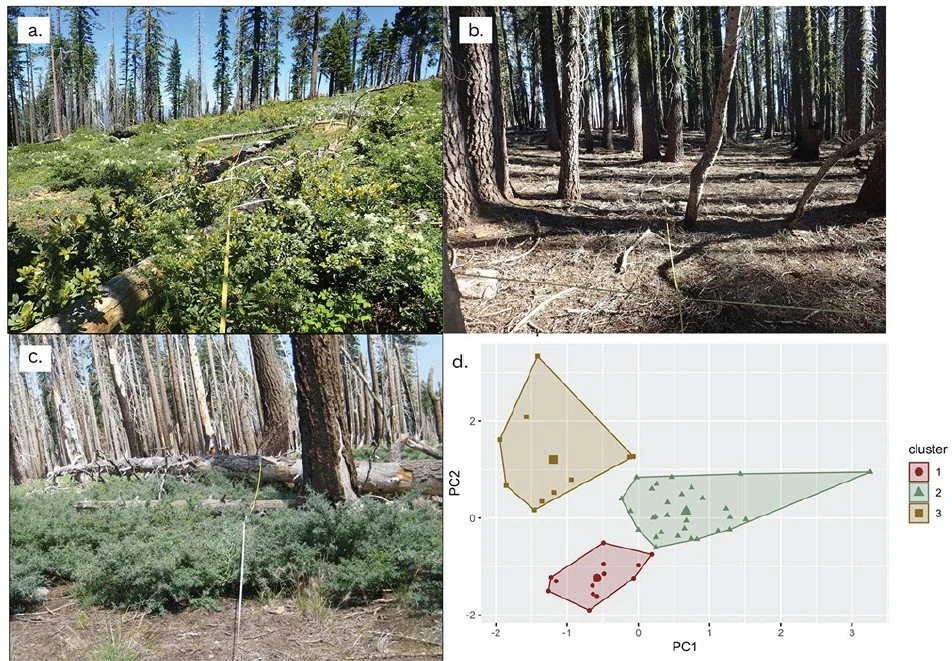
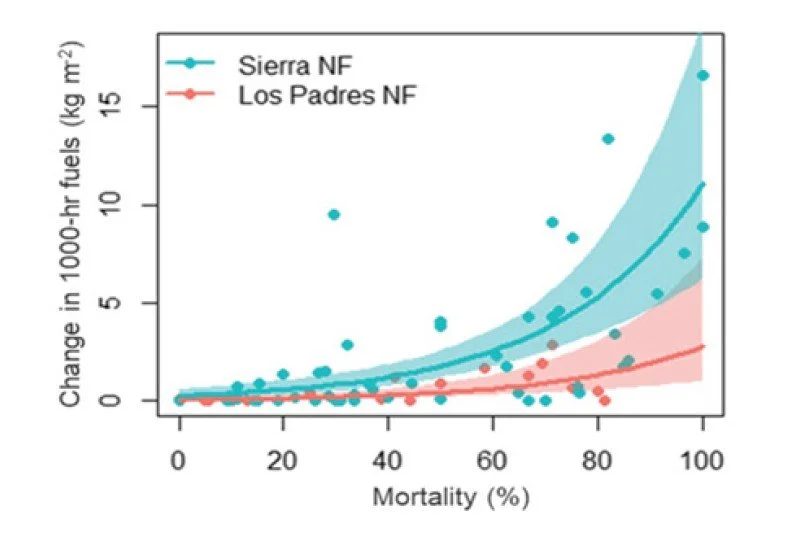
Interacting disturbances have increasingly come to shape stand structure and fuel characteristics in seasonally dry western forests. Between 2012 and 2016, concurrent multi-year drought and outbreaks of western pine beetle, fir engraver beetle, and pinyon ips resulted in the mortality of an estimated 147 million trees across California’s forests, with central and southern California being most impacted. Peak tree mortality occurred between 2015 and 2016, leading researchers to investigate changes in stand structure, fuel loading, and fire behavior in the four following years (2015-2019). Data collection occurred in forested plot networks in the Los Padres (LPF) and Sierra National Forests (SNF). Southern plots (all on the LPF) were pinyon pine and canyon live oak-dominated, while northern plots (SNF) were mixed-conifer, including ponderosa, lodgepole, and sugar pine, incense cedar, black oak, and white and red fir at higher elevation sites. Both forest types have experienced densification as a result of fire suppression over the past two centuries, leading to standing fuel continuity that, when combined with heavy, dry surface fuel loads and appropriate weather conditions, could produce severe fire behavior.

View Research Brief

View Article (Open Access)

Read More

Dead tree removal after mass mortality: Effects on regeneration, fire severity, and carbon stocks

Dead tree removal after mass mortality: Effects on regeneration, fire severity, and carbon stocks

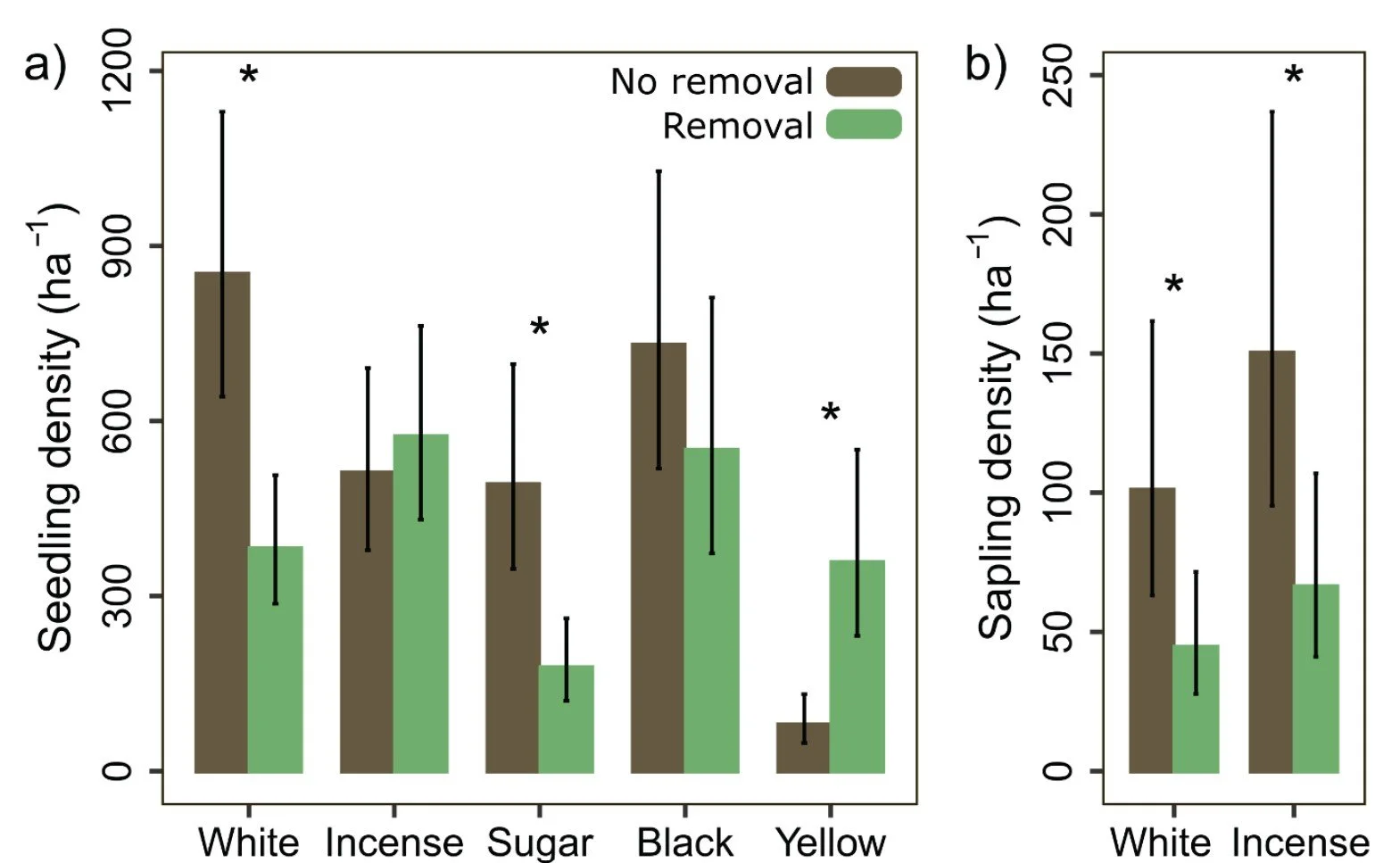
Despite the vast area and large numbers of trees affected by drought- and bark beetle-induced tree mortality worldwide, relatively little is known about how post-mortality management practices affect forest recovery, particularly in forests historically adapted to frequent fire. Cutting and removing dead trees after a mass-mortality event provides an opportunity to salvage timber and lessen wildfire risk by reducing fuel loads, but the ecological impacts of this strategy extend beyond fuel reduction. A tree mortality event of locally unprecedented extent and severity occurred in the Sierra Nevada of California, USA, during and after the exceptional 2012-2016 hot drought, providing an opportunity to evaluate the ecological effects of the management practice of dead-tree removal.

The authors compared adjacent mixed conifer forest areas with and without dead-tree removal, with the aim of assessing how dead-tree removal affects: 1) the amount and composition of forest fuels; 2) tree regeneration in the form of seedling and sapling density and species composition; 3) carbon pools; and 4) fire behavior and severity and fuel loads over the following century.

View Research Brief

View Article

Read More

Opportunities to leverage beneficial areas of even undesirable wildfires

Opportunities to leverage beneficial areas of even undesirable wildfires

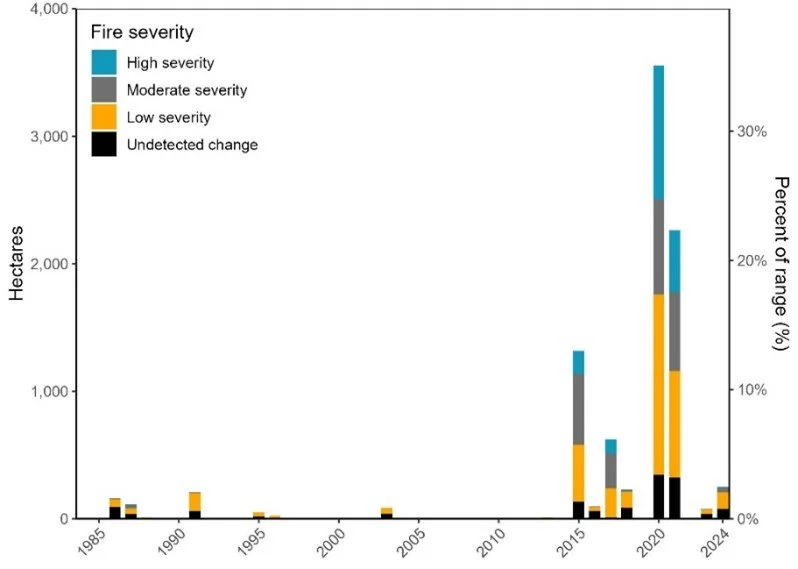
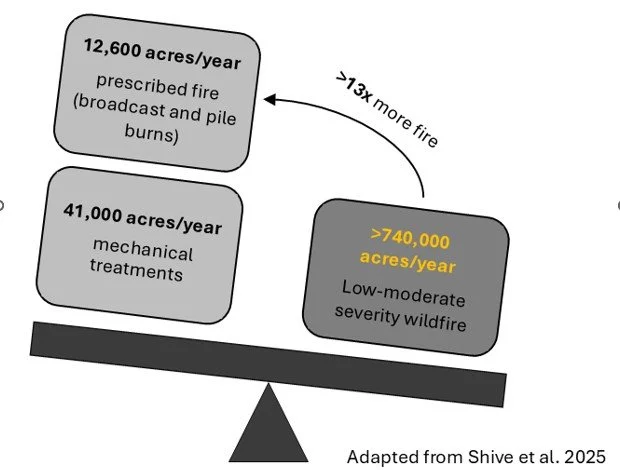
Successive catastrophic wildfire seasons in western North America have escalated the urgency around reducing fire risk to communities and ecosystems. In historically frequent-fire forests, government agencies are committing significant resources to fuel reduction treatments that can reduce the probability of high severity wildfire. However, even catastrophic fires with large areas of high severity can still have substantial area of lower severity fire that may be improving forest conditions locally, acting as “treatments.” Understanding how these areas of beneficial fire compare and interact with active management can help inform treatment priorities and opportunities. As a test case, we explored trends in the yellow pine and mixed conifer forests (YPMC) in the Sierra Nevada of California over a 22-year period (2001-2022).

View Research Brief

View Article (Open Access)

Read More

Untrammeling the wilderness: restoring natural conditions through the return of fire

Untrammeling the wilderness: restoring natural conditions through the return of fire

Within many designated wilderness areas, the intentional exclusion of fire has clearly altered ecological processes and thus constitutes a fundamental and ubiquitous act of trammeling. Through a framework that recognizes four orders of trammeling, the authors demonstrate the substantial, long-term, and negative effects of fire exclusion on the natural conditions of fire-adapted wilderness ecosystems. In order to untrammel more than a century of fire exclusion, the implementation of active programs of intentional burning may be necessary across some wilderness landscapes.

View Research Brief

View Article (Open Access)

Read More

Realignment of federal environmental policies to recognize fire’s role

Realignment of federal environmental policies to recognize fire’s role

This article highlights the barriers that federal environmental statutes create for reintroducing and maintaining beneficial fire in fire-adapted and fire-dependent ecosystems, proposing specific policy reforms to support the use of beneficial fire on these landscapes.

View Research Brief

View Article (Open Access)

Read More

Fuel Management Approaches in Desert Wetlands

Fuel Management Approaches in Desert Wetlands

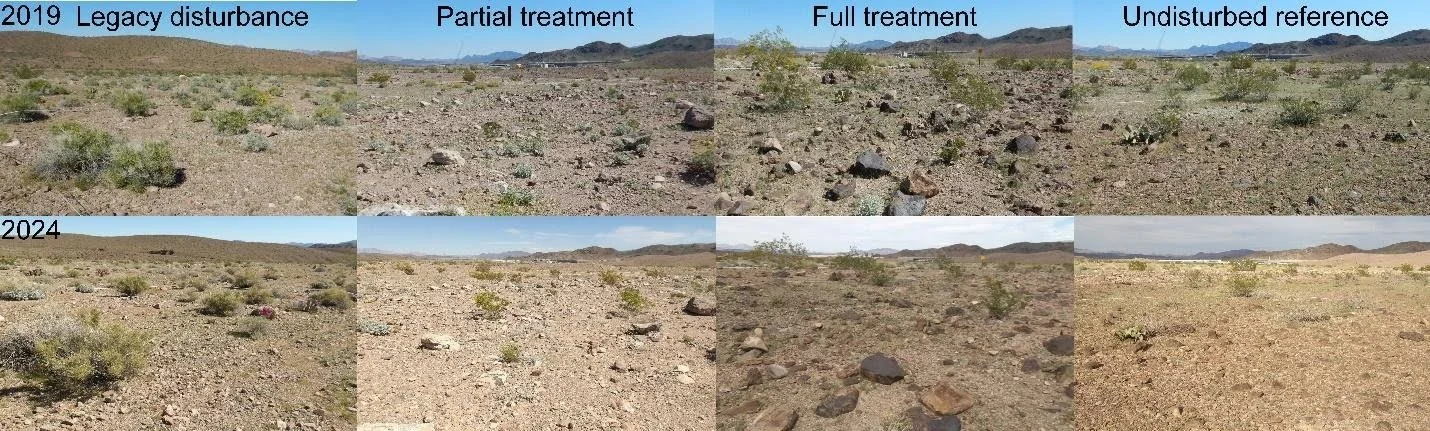
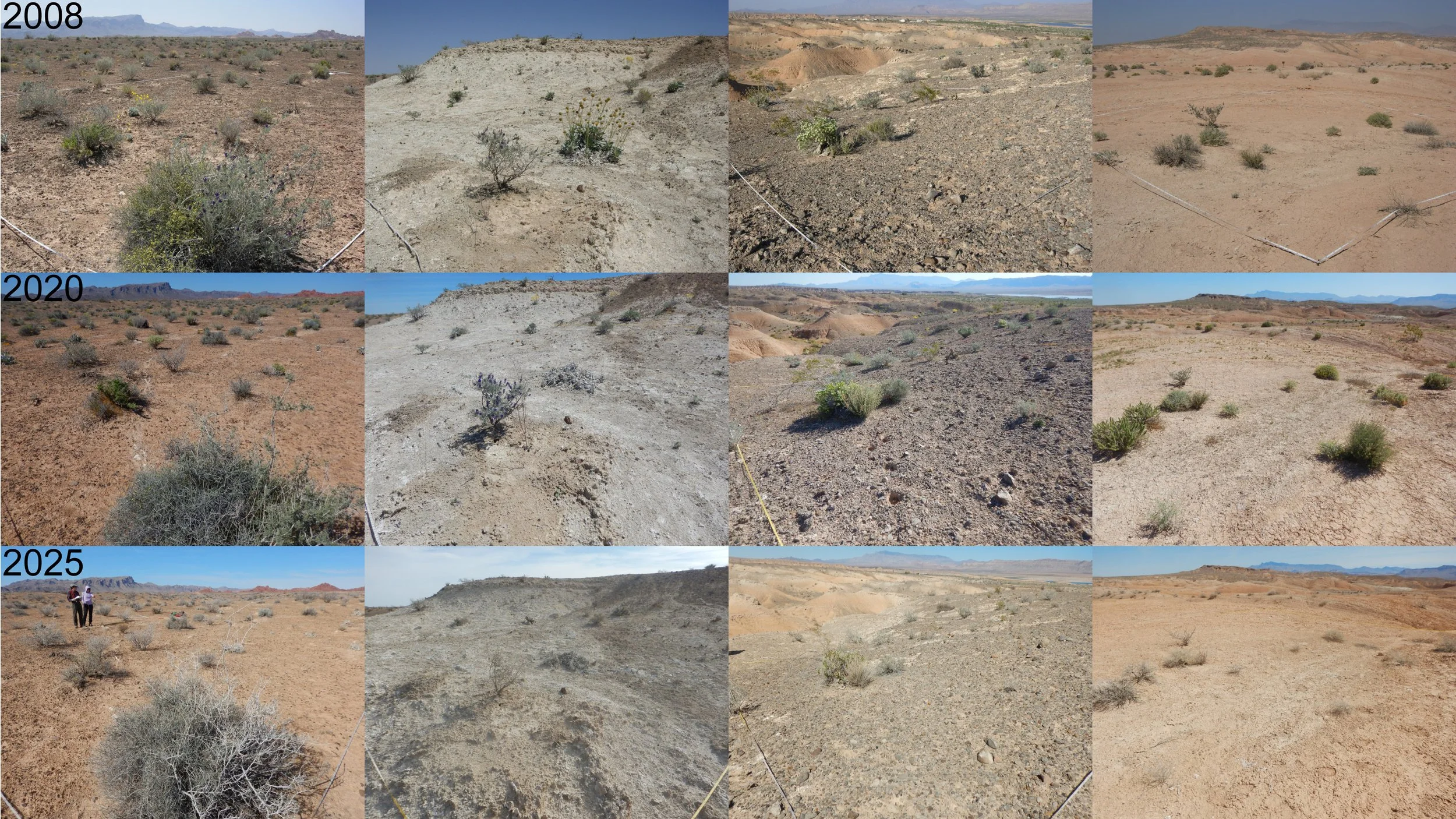
In the Mojave Desert wetlands of Las Vegas, Nevada, a two-year study across 24 sites evaluated the outcomes of different management strategies for hazardous fuel reduction of the invasive common reed (Phragmites australis) and increasing native plant diversity. The study suggests that coupling active revegetation of native species with maintenance management activities to keep reed cover low could be a next research step in identifying long-term strategies for converting reed monocultures to more diverse native, less-fire-prone communities in desert wetlands.

View Research Brief

View Article (Open Access)

Read More

Prescribed Burn Windows Under Future Climatic Conditions

Prescribed Burn Windows Under Future Climatic Conditions

Here, the authors review two studies that have assessed seasonality and duration of burn windows: A California-focused study on trends in historic burn windows (Baijnath-Rodino et al. 2022) and a Western US-focused study on recent trends and potential future changes (Swain et al. 2023). This brief will focus on the California-specific finding from Swain et al. (2023).

View Research Brief

View Baijnath-Rodino et al. 2022

View Swain et al. 2023 (Open Access)

Read More

Ecological Silviculture for Sierra Nevada Mixed Conifer Forests

Ecological Silviculture for Sierra Nevada Mixed Conifer Forests

This brief discusses adjustments to current silvicultural systems in Sierra Nevada mixed conifer forests to align more closely with historical disturbance regimes, emphasizing ecological silviculture approaches like prescribed fire, mechanical treatments, and gap-based harvesting to enhance forest resilience and restoration.

View Research Brief

View Book Chapter

Read More

Using prescribed fires in young forests: A pyrosilvicultural approach

Using prescribed fires in young forests: A pyrosilvicultural approach

This paper asserts that prescribed fire will be a key tool in the development of new approaches to reintroduce structural complexity in young forests and enable them to persist through future wildfires.

View Research Brief

View Full Article (Open Access)

Read More

The efficacy of Red Flag Warnings in mitigating human-caused wildfires

The efficacy of Red Flag Warnings in mitigating human-caused wildfires

In our efforts to predict fire danger, we coupled CAL FIRE (California Department of Forestry and Fire Protection) FRAP (Fire and Resource Assessment Program) fire data with hourly climate data from four stations, and with regional indices of SAW wind speed, and with seasonal drought data from the Palmer Drought Severity Index. We found that different tools work better for SAW fires versus non-SAW fires.

View Research Brief

Full Article will be available soon.

Read More

Climate and weather drivers in southern California Santa Ana Wind and non-Santa Wind fires

Climate and weather drivers in southern California Santa Ana Wind and non-Santa Wind fires

In our efforts to predict fire danger, we coupled CAL FIRE (California Department of Forestry and Fire Protection) FRAP (Fire and Resource Assessment Program) fire data with hourly climate data from four stations, and with regional indices of SAW wind speed, and with seasonal drought data from the Palmer Drought Severity Index. We found that different tools work better for SAW fires versus non-SAW fires.

View Research Brief

View Full Article (Open Access)

Read More

Human and climatic influences on wildfires ignited by recreational activities in national forests in Washington, Oregon, and California

Human and climatic influences on wildfires ignited by recreational activities in national forests in Washington, Oregon, and California

Fire is strongly linked to outdoor recreation in the United States. Recreational uses of fires, whether in designated campgrounds or the backcountry, include warmth, cooking, and fostering a comfortable atmosphere. However, through inattention, negligence, or bad luck, recreational fires sometimes ignite wildfires. This paper evaluates whether the density of wildfire ignited by recreation or ceremony on U.S. Forest Service lands, and the size of such wildfires, is influenced by proximity to designated campgrounds, visitor density, previous and current drought conditions, and the type of vegetation surrounding the ignition point.

View Research Brief

View Full Article

Read More

Thinning + burning treatments effectively reduce fire severity

Thinning + burning treatments effectively reduce fire severity

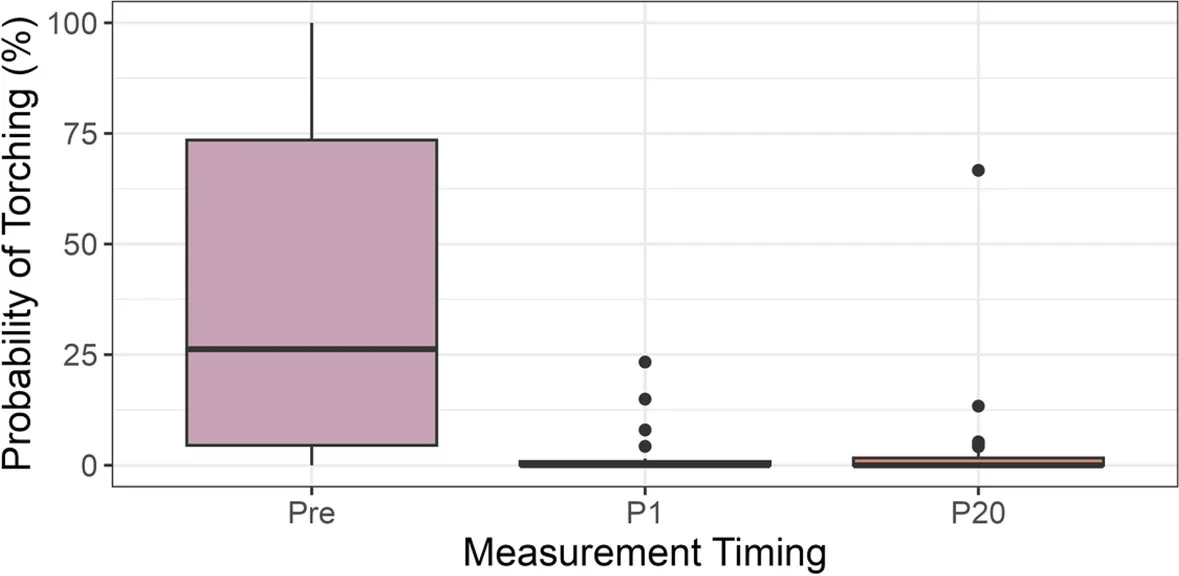
Although fuels treatments are generally shown to be effective at reducing fire severity, there is widespread interest in monitoring that efficacy as the climate continues to warm and the incidence of extreme fire weather increases. This paper compared basal area mortality across adjacent treated and untreated sites in the 2021 Dixie Fire of California’s Sierra Nevada.

View Research Brief

View Full Article (Open Access)

Read More

Using historical aerial imagery to assess non-conifer vegetation type change under fire exclusion

Using historical aerial imagery to assess non-conifer vegetation type change under fire exclusion

Although vegetation types other than conifer forests make up the majority of burned area in California wildfires, relatively few studies quantify the drivers and patterns of vegetation change in these ecosystems. The impacts of fire exclusion on non-conifer systems remain poorly understood, and the relative influence of fuels compared to factors like climate change or type conversion on fire behavior is largely unknown. To address this knowledge gap, the authors investigated large-scale vegetation change as a possible driver of current trends in fire behavior within mixed-hardwood and shrub-dominated ecosystems in central and coastal Northern California.

View Research Brief

View Full Article

Read More

Assessing giant sequoia mortality and regeneration following high-severity wildfire

Assessing giant sequoia mortality and regeneration  following high-severity wildfire

Giant sequoia (Sequoiadendron giganteum) regeneration is reliant on local surface fires, where episodic pulses of heat desiccate and open their cones, releasing seed onto bare mineral soil. Historically, these fires were characterized as ‘mixed severity’, composed of a large matrix that burned at low or moderate severity interspersed with small forest gaps created by local high severity fire. While sequoia regeneration can flourish within these small, high severity gaps,recent ‘megafires’ have produced unprecedentedly large patches of high severity, where the majority of sequoias as killed. This research aims to help resource managers determine whether and where to replant giant sequoia after high severity wildfire.

View Research Brief

View Full Article

Read More

Where are the Sierra Nevada’s large trees and can they persist?

Where are the Sierra Nevada’s large trees and can they persist?

Identification and conservation of mature and old-growth forests has become a federal government priority.  In California’s Sierra Nevada’s most of the remaining large trees are concentrated on Forest Service and National Park Service lands. We used airborne lidar data to census large (≥30” diameter at breast height (DBH)) and very large (≥40”) trees across three large Sierra landscapes. We found that large trees are either locally absent to rare or are aggregated in stands with 8-20 large trees per acre.

View Research Brief

View Full Article

Read More

Using Stand Density Index (SDI) as a stocking guide in frequent fire forests

Using Stand Density Index (SDI) as a stocking guide in frequent fire forests

Quantification of competition levels in forest stands benefits assessments of stand health, vulnerability to stressors, and prediction of future stand dynamics. Because different forests have different carrying capacities that can be maintained given differences in site productivities, it is important to consider stocking in terms that are relative to these maximum levels. Stand Density Index (SDI) is a common metric of competition in temperate forests of Western North America, originating in 1933 and gaining widespread use within the field of forestry throughout the 20th century. The authors of this study synthesized the large body of published literature on SDI since its introduction in 1933.

Read More

Fire suppression biases fires to be more extreme

Fire suppression biases fires to be more extreme

Decades of fire suppression have increased fuel loads and fire severity, leading to the “fire suppression paradox”—by suppressing fires we make fires harder to put out in the future. However, in this study, the authors show a separate impact of fire suppression that may cause even greater increases in average fire severity than climate change or fuel accumulation.

View Research Brief

View Full Article (Open Access)

Read More