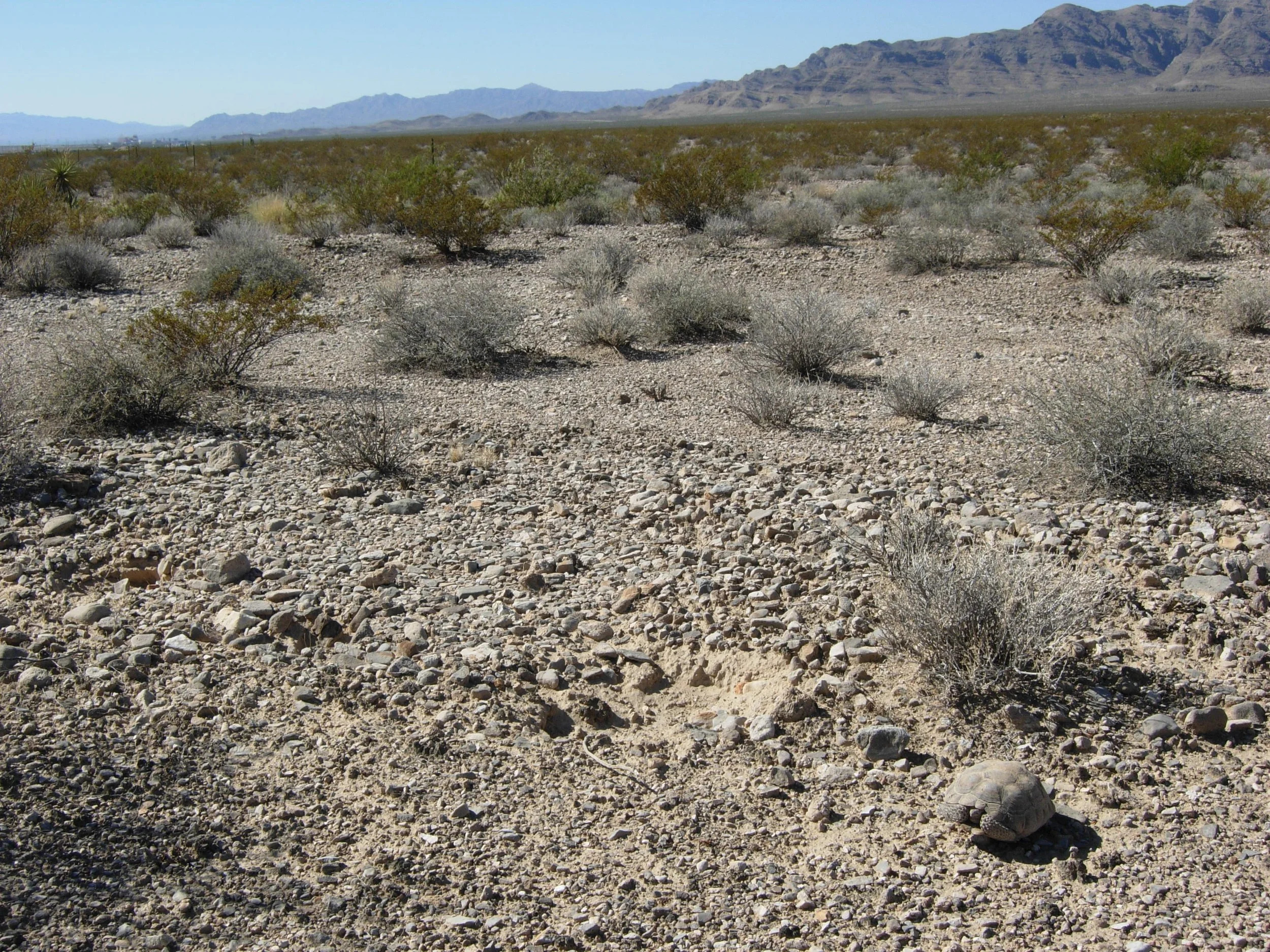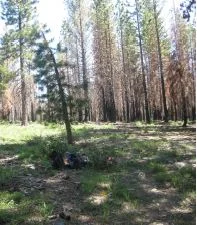
Fire risk and responses of tortoises to burned habitat in the Northeastern Mojave Desert: Presentation PDF
/This presentation was given at the Desert Symposium 2014.
Presenter: Nussear et al.
View Presentation PDF >
This presentation was given at the Desert Symposium 2014.
Presenter: Nussear et al.
View Presentation PDF >
The authors examined the relationship between fuels and fire behavior by examining how fire suppression has affected fire severity in different forest ecosystems in California. The authors tested the hypothesis that fire behavior is limited by fuel availability in some California forests where climatic conditions during the fire season are nearly always conducive to burning and the primary limiting factor for fire ignition and spread is the presence of sufficient fuel.
Read MoreIn this collection of essays on the Californian region, Stephen J. Pyne colorfully explores the ways the region has approached fire management and what sets it apart from other parts of the country.
Read MoreIn many past and present ecosystems, changes in animal, plant, and human communities have been more influential in rapid local fire regime disruption than climate. The good news is that, unlike climate change, these direct, proximate community causes can be practically addressed by fire and resource managers.
Read MoreResprouting plants are common throughout the world and resprouting is a familiar response to any kind of disturbance that kills living tissue. Resprouting is a seemingly simple trait that has complex underlying morphological and anatomical origins among diverse evolutionary lineages.
Read MoreSome shrub species are obligate resprouters, some are obligate seeders, and others are facultative seeders, combining both resprouting and postfire seeding to various degrees. How could this diversity in fire response have evolved and how does it coexist?
Read MoreThis long-anticipated reference and sourcebook for California’s remarkable ecological abundance provides an integrated assessment of each major ecosystem type—its distribution, structure, function, and management. A comprehensive synthesis of our knowledge about this biologically diverse state, Ecosystems of California covers the state from oceans to mountaintops using multiple lenses: past and present, flora and fauna, aquatic and terrestrial, natural and managed.
Read MoreThis brief discusses how to improve forage for the threatened desert tortoise through increasing abundance of native plant forage species.
Read MoreThis brief discusses the findings from an in-depth synthesis of animal responses to fires in California shrubland systems.
Read MoreData Product and Research Brief
Read MoreResearch Brief/Management Consideration. One topic that is generating a great deal of interest among fire management professionals as California enters the fall prescribed fire season is whether we should be burning during this fourth year of drought. This brief discusses what managers should consider before doing a prescribed burn.
Read MoreThe six features of effective federal fire management plans are: consistent and compatible,
collaborative, clear and comprehensive, spatially and temporally scalable, informed by the best
available science, flexible and adaptive. Additional tools and strategies are discussed.
Meyer, M. D., Roberts, S. L., Wills, R., Brooks, M., & Winford, E. M.. 2015. Principles of effective USA federal fire management plans. Fire Ecology 11(2): 59–83. doi: 10.4996/fireecology.1102059.
Read More
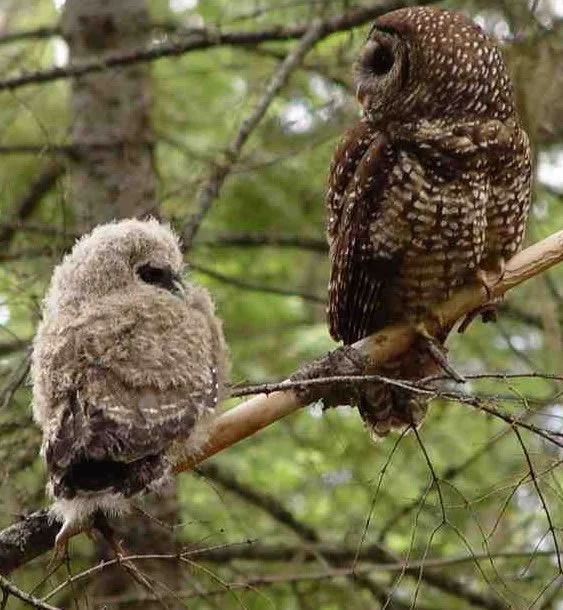
In this study, the average core area of the owls’ pre-fire forest habitat was 106 ha with a greater proportion of hardwoods compared to an average core area of 180 ha in the Sierra in which conifers dominate.
Read MoreThis ambitious four-year study assessed fire effects on the diversity of ten carnivore species and frequency of the three most common carnivore species after a 5670- ha fire in 2007.
Read MoreIn this 5-year study, the post-fire populations and microhabitat preferences of four small mammal species were compared. The study analyzed preferences in unburned, moderate and high-severity fire in mixed conifer forest.
Read MoreHotter, drier climates resulting from climate change will reduce the ability of woody plants to recover after fire. When combined with shorter fire return intervals, the resulting “interval squeeze” increases the risk for individual species extirpation.
Read MoreThe authors surveyed understory vegetation across a gradient of increasing canopy loss, ranging from unmanaged forest to fuel treatments, fuel treatments followed by low-moderate severity wildfire, and high-severity wildfire only.
Read MoreAgenda for the Mojave Desert Fire Science and Management Workshop. Barstow, CA 2014.
View Agenda PDF >
Presented at the Mojave Desert Fire Science and Management Workshop. Barstow, CA 2014.
This presentation explains the use and implication of utilizing modeling tools to predict invasive species distribution after a fire.
View Presentation PDF >

The California Fire Science Consortium is divided into 4 geographic regions and 1 wildland-urban interface (WUI) team. Statewide coordination of this program is based at UC Berkeley.
View the about page to learn more >
This regional Fire Science Exchange is one of 15 regional fire science exchanges.
Link to another exchange: