Impact of Short Interval Fires in Shrublands: Research Brief
/Fire in chaparral is a natural process, but only when it occurs within the range of conditions represented by its fire regime.
View Research Brief PDF >
Fire in chaparral is a natural process, but only when it occurs within the range of conditions represented by its fire regime.
View Research Brief PDF >
Here, Jon Keeley and his colleagues document an example of immaturity risk for population decline in knobcone pine (Pinus attenuate), a rare, serotinous, obligate-seeding pine species.
View Research Brief PDF >
Four decades after being type converted to a non native grassland, the soil and hydrology of the USFS San Dimas Experimental Forest in southern California was compared to the adjacent, natural chaparral.
View Research Brief PDF >
Researchers studied the human influence on fire regimes at the WUI using California Department of Forestry and Fire Protection (CDF) data from a majority of counties in the state, coupled with associated housing and other human infrastructure data.
View USGS Research Brief PDF >
At two sites in Mono County, California, two thinning treatments were compared: machine mastication versus cut/pile/burn by hand crews using chain saws.
View USGS Research Brief PDF >
Syphard, Brennan and Keeley asked how the size of the defensible space zone affected fire outcomes using a dataset of 687,869 homes with their property boundaries.
View Research Brief PDF >
The Fire Science Exchange Network was initiated by the Joint Fire Science Program. Guidelines to be effective "boundary organizations" are discussed.
View Research Brief PDF >
The authors sought to determine how mixed conifer forests under an active fire regime differ from forests under fire suppression.
View Research Brief PDF >
Stoof et al. discusses a prescribed fire experiment in Portugal on soil characteristics.
View Research Brief PDF >
This paper offers a reconstruction of historic fire regimes and forest age structures in a mixed-‐ conifer forest in the Klamath Mountains of northern California, demonstrating the historic importance of temporal and spatial controls on fire in the area, and providing critical context for current restoration and management activities.
View Research Brief PDF >
North and Hurteau (2011) investigated the forest carbon tradeoffs of wildfire in treated and untreated mixed-‐conifer forests, as well as the carbon cost of implementing fuels reduction treatments.
View Research Brief PDF >
Here, Walter Johnson observes the effects of 20 years of grazing and browsing by cattle and deer on chaparral re-‐growth in the Sierra Nevada foothills
View Research Brief PDF >
Callaway and Davis were able "to quantify dynamic chaparral in vegetation patterns and the relative importance of fire, livestock grazing, topography, and substrate in grassland, coastal sage scrub, chaparral, and oak woodland distribution in central coastal California.”
View Research Brief PDF >
The authors surveyed administrators of regulatory and voluntary wildfire reduction programs in 25 US states to gain information on how they are organized, what they are trying to accomplish, what obstacles existed in their implementation, and how well they may be working.
View Research Brief PDF >
This paper uses tree ring data to develop climate and fire chronologies connections.
View Research Brief PDF >
Management strategies to reduce fire spread and severity typically involve targeted reduction of forest fuels through some combination of mechanical, hand, and/or burning treatments. A 2012 study by Safford et al. evaluates the effectiveness of such forest fuel treatments in mixed conifer and yellow pine forests in the California National Forests.
Read MoreIn the April issue of Ecological Applications, USGS scientists Kyle Merriam (currently with the USFS) and Dr. Jon Keeley and USFS colleague Dr. Jan Beyers report that an unintended result of these fuel modification programs can be the introduction and spread of nonnative invasive plant species.
View USGS Research Brief PDF >
Two studies led by USGS and the Conservation Biology Institute have examined the factors affecting fuel break effectiveness in national forests.
View USGS Research Brief PDF >
In a paper published in Fire Management Today, USGS scientist Jon Keeley coauthors a paper with colleagues from the California Chaparral Institute that analyzes weather and fuel factors in a case study of a critical part of the 2003 Cedar Fire perimeter in San Diego County.
View USGS Research Brief PDF >

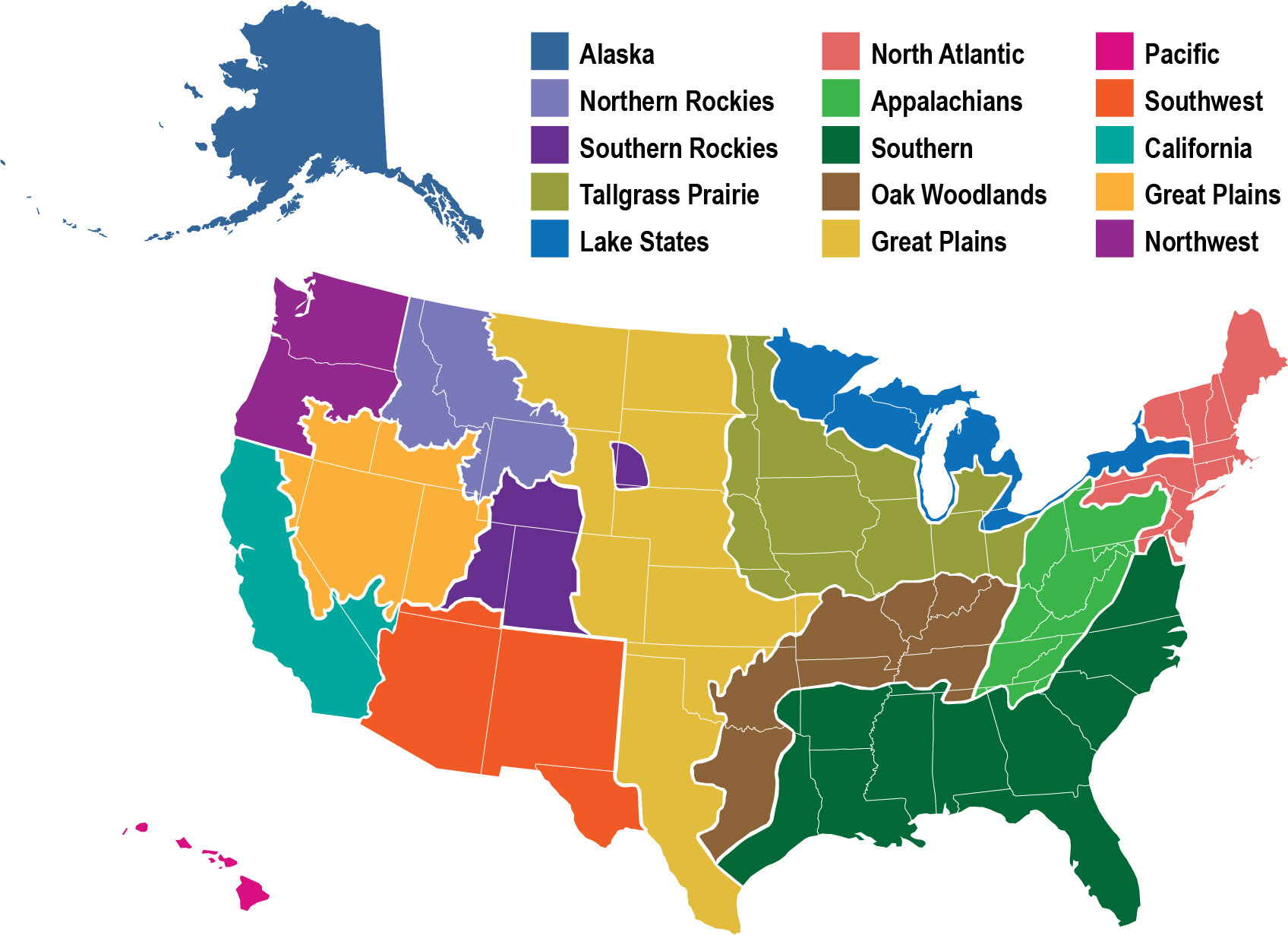
The California Fire Science Consortium is divided into 4 geographic regions and 1 wildland-urban interface (WUI) team. Statewide coordination of this program is based at UC Berkeley.
View the about page to learn more >
This regional Fire Science Exchange is one of 15 regional fire science exchanges.
Link to another exchange: