Charcoal Evidence that Big SoCal Fires Are Natural: Research Brief
/Large fire events were a normal part of southern California’s natural history based on charcoal evidence.
Read MoreLarge fire events were a normal part of southern California’s natural history based on charcoal evidence.
Read MoreStand-replacing patch size was highly variable in a high elevation mixed conifer forest in the Sierra Nevada with a range of variation dominated by many small patches < 10 acres (4 ha) and few large patches >148 acres (60 ha).
View Research Brief PDF >
This research brief discusses the changes in soil moisture after chaparral was removed in the long and short term.
View Research Brief PDF >
Large, high-intensity wildfires are a natural feature of southern California landscapes and are not directly the result of past fire suppression activities.
View Research Brief PDF >
This report presents a model for manipulating chaparral sites to be more productive for wildlife.
View Research Brief PDF >
The authors conducted prescribed burns in two masticated areas in northern California to assess fire effects in treated stands, compare fire behavior and effects with outputs from commonly used models, and evaluate the ability of mastication to increase stand resilience under a range of hypothetical wildfire scenarios.
Read MoreIn this paper, Agee and Skinner reviewed related literature, simulated fire behavior in different treatment types, and considered five real-‐world examples of fuels treatments and wildfire. Using these methods, they distilled a set of basic principles underlying effective treatments that reduce fuels and limit wildfire severity and extent.
View Research Brief PDF >
This study assessed the effects of both prescribed burning and stand structure management through thinning on bark beetle activity and associated levels of tree mortality.
Read MoreThis 2011 review synthesizes the growing body of scientific literature on the carbon balance of fuel treatments (i.e. the ability of treatments to achieve net carbon offsets.) The purpose of this synthesis is to highlight research relevant to forest managers and policymakers interested in the potential for forest management to contribute to climate change solutions.
View Synthesis PDF >
This brief summarizes fire ecology and management issues in California mixed-conifer forests for an audience without a background in fire, including the general public and media.
View PDF >
This paper tests hypotheses pertaining to the impact of past fire suppression on southernCalifornia shrubland fire regimes.
Read MoreThis project verified the common assumption that annual growth rings can be used to determine age in California’s woody chaparral species.
Read MoreWith dangerous chaparral fires on the rise in the 1970’s, Clive Countryman asks and answers, “[Must] such [conflagrations] be accepted as inevitable in southern California? I think not!” And he outlines a set of fuel modification solutions...
View Research Brief PDF >
Alien plants and fire have recently been recognized as significant land management problems in the Mojave and Colorado deserts, especially as they relate to management of the federally threatened desert tortoise.
View Research Brief PDF >
This study looked at alien plant invasion in chaparral and sage scrub ecosystems over a period of five years after fire across a six-county area in southern California.
Read MoreExtreme fire intervals are one obvious concern for managers of fire dependent species such as the serotinous knobcone pine (Pinus attenuata).
Download PDF >
This 1987 paper by Richard Minnich summarizes newspaper accounts for selected fires between 1868 and 1900 in the San Gabriel Mountains of southern California, and describes in detail the behavior of three summer fires in 1896, 1898 and 1900 on Mt. Wilso.
Read MoreIn this study, prototype summaries are constructed for varying time intervals using California wildfire data from 1990 to 2006, as well as summaries of spatial patterns of fires within each wildfire season.
Read More
A model has been developed to predict wildfire risk in northeastern Mojave Desert. The model incorporates remote sensing data as well as field sampling data to generate the predicted fire risk.
Read MoreThis report is one of the first and most dramatic accounts of the southern California “fire-‐flood” cycle that documented the magnitude of postfire debris flows in denuded watersheds.
Read More
The California Fire Science Consortium is divided into 4 geographic regions and 1 wildland-urban interface (WUI) team. Statewide coordination of this program is based at UC Berkeley.
View the about page to learn more >
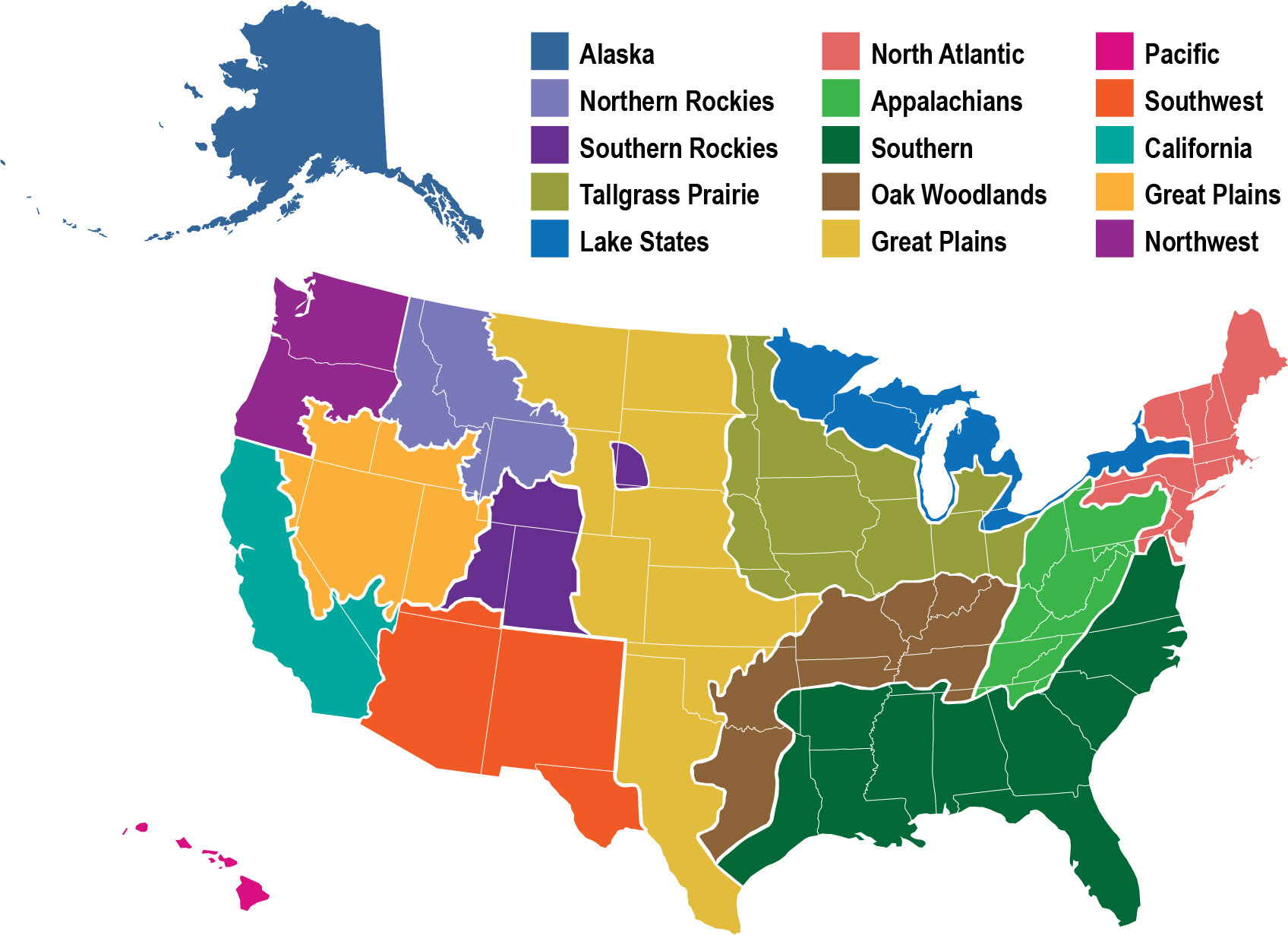
This regional Fire Science Exchange is one of 15 regional fire science exchanges.
Link to another exchange: