Manzanita Mania: From Carolus Linnaeus to the Present: Research Brief
/
Take a walk down memory lane as we explore the history of collaboration vs. competition in taxonomy of manzanita and the characters behind the discovery.
Read MoreTake a walk down memory lane as we explore the history of collaboration vs. competition in taxonomy of manzanita and the characters behind the discovery.
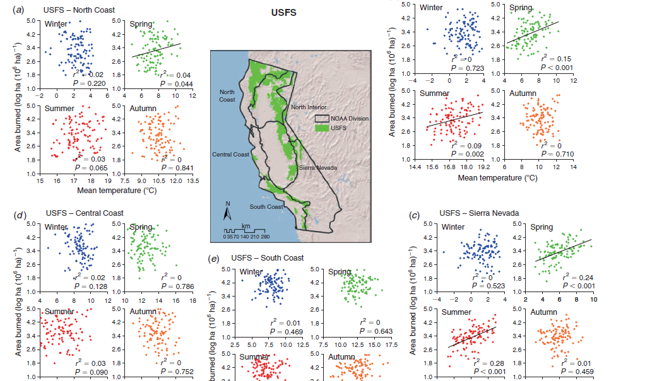
Read MoreIn a study published in the Proceedings of the National Academy of Sciences, researchers with the Conservation Biology Institute and the U.S. Geological Survey showed that, across the U.S. on landscapes dominated by humans, climate has played a relatively small role in determining wildfire activity.
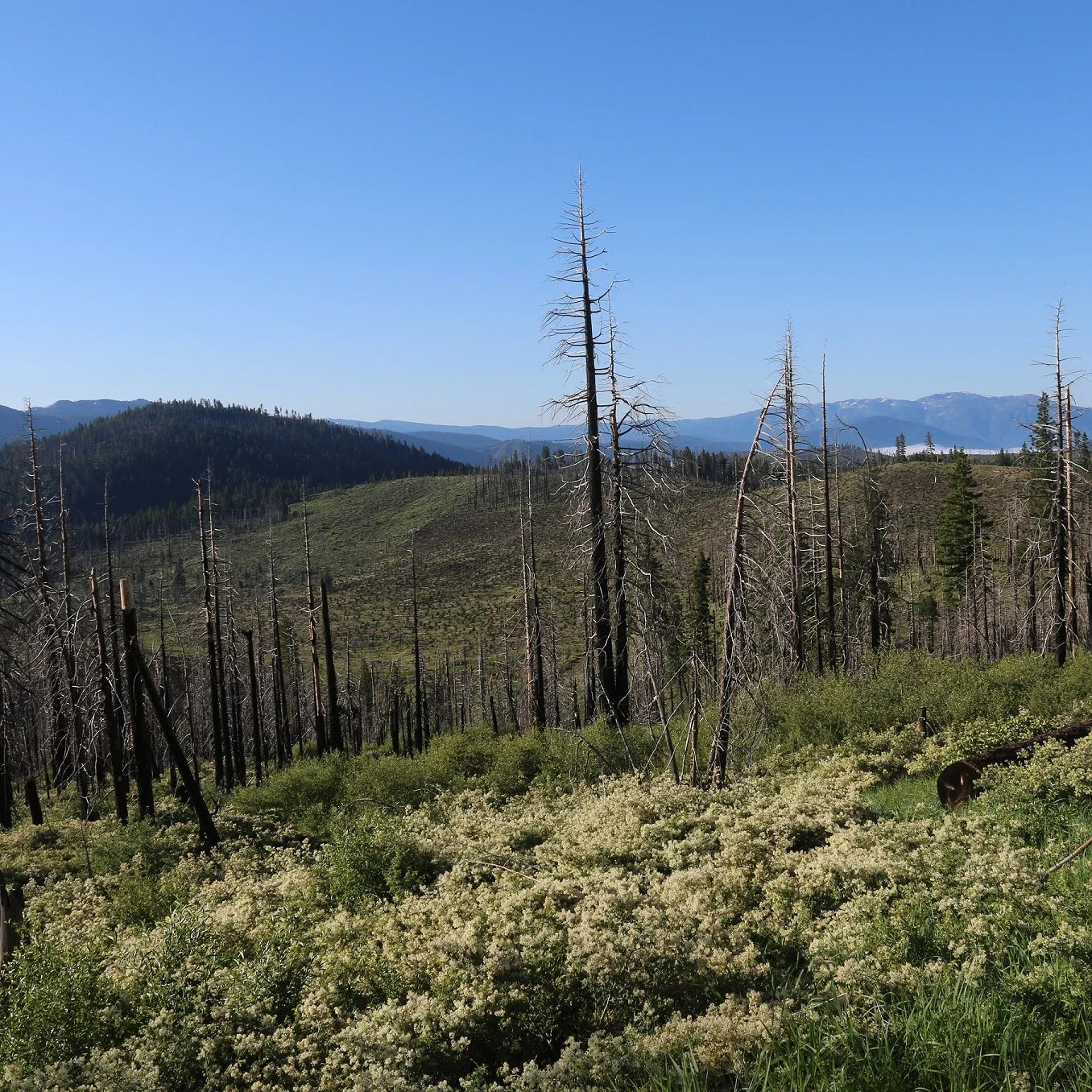
Read MoreThis brief describes the advantages and evolution of postfire epicormic resprouting, where trees resprout from the trunk or stem of trees. This form of resprouting is more rare than resprouting from the base of plants and occurs in Australia and South Africa, as well as in California, the Mediterranean Basin and the Canary Islands in the northern hemisphere.
Read MoreThis research brief discusses national trends in rebuilding and new development after wildfire, as well as policy choices and adaptation measures local governments and communities pursued after fire, through case studies.
Read More
Bumble bees are important pollinators of native plant species. This brief provides information that can support managers in making nuanced decisions to benefit bumble bees during post-fire management.
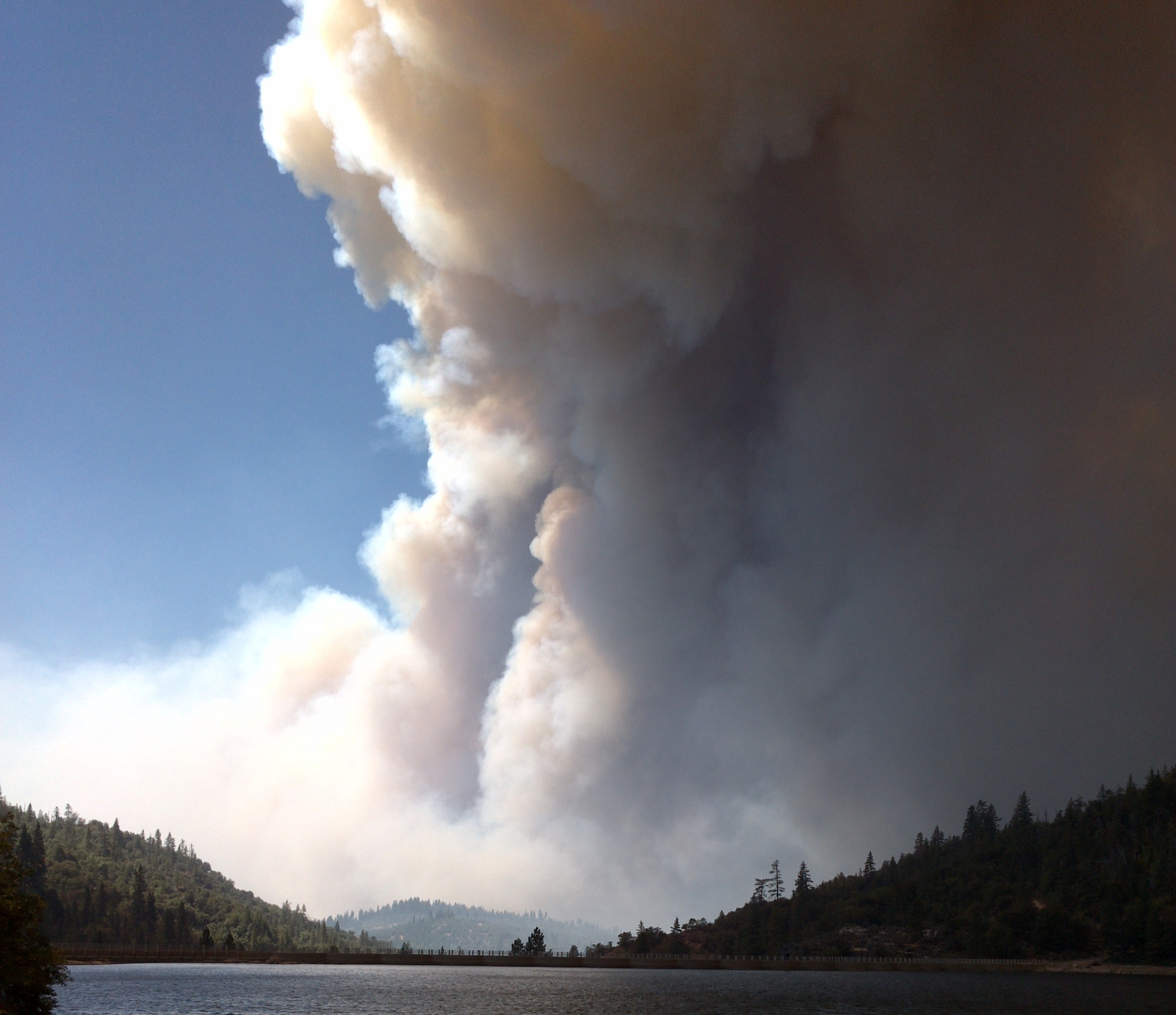
Read MoreAuthors analyzed the 2013 Rim Fire to see how fire severity varied with factors. Potential factors included the proportion of the landscape previously treated or burned, fire weather, vegetation, and water balance.
Read MoreFuture moderate and high-severity fires may pose a substantial threat to the long-term persistence of the California spotted owl (Strix occidentalis occidentalis).
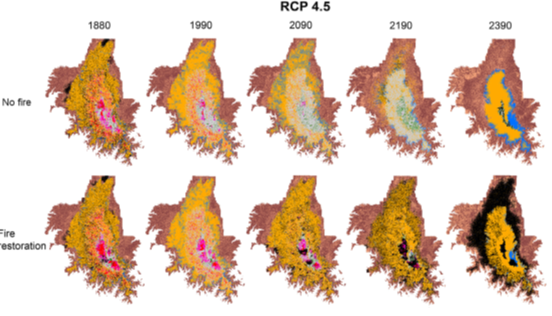
Read MoreFuture climate-induced shifts in fire regimes and plant distributions could uncouple vegetation from the fire regimes for which they are adapted. The brief discusses changes to fire-adapted plant communities under modeled climate change scenarios and their implications on the Kaibab Plateau landscape.
Read MoreUsing a geodatabase, researchers found that the maximum elevation extent of wildfires and the probability of wildfire occurrence above 3000 m have increased over the last century in the Sierra Nevada. This trend may accelerate vegetation shifts towards upper montane forest types in current subalpine systems.
Photo courtesy of Sasha Berleman
Read MoreTwo recent studies reviewed here, have addressed the question of what distance into fuel treatments fire needs to travel before fire severity is diminished.
View Research Brief PDF >
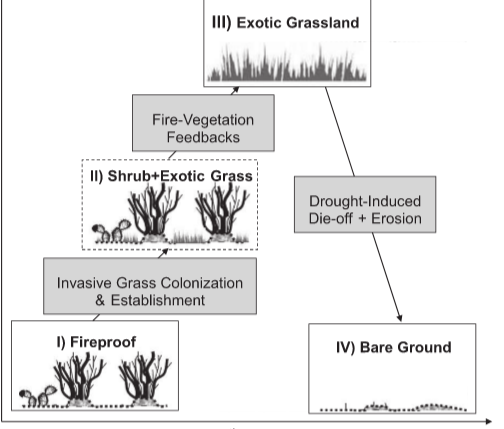
For desert shrubland species that have evolved without fire, the introduction of a grass-fire, positive feedback cycle is particularly problematic. This brief discusses work done by researchers who modeled the grass-fire cycle for non-fire-adapted desert shrublands under three sets of climate conditions.
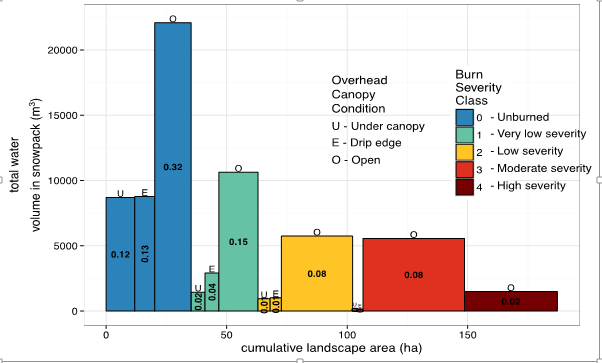
Read MoreFire is a strong driver of changes in montane forest structure in California’s Sierra Nevada and southern Cascade mountain ranges, which provide much of the snowpack and associated water storage for the state of California. This paper investigates how fire can influence snowpack and water storage.
Read MoreThis research brief looks at changes in land cover, water, and forest health within the Illilouette Creek Basin in Yosemite National Park. This basin has a unique fire management history, with most areas burned in the last 40 years. Results suggest that fire has had a positive influence on a number of the Basin's ecosystem functions.
Read MoreDuring normal levels of beetle activity, fuel treatment reductions either cause no trees to die from beetles or just a few. If tree deaths occur, they reinforce fuel hazard reduction and forest restoration goals.
Read MoreBoth Southern France and California have large amounts of housing in the Wildland Urban Interface where local vegetation is highly dense and fire adapted. This research brief compares the land use policies used to reduce the exposure of homes to wildfire in these two locations.
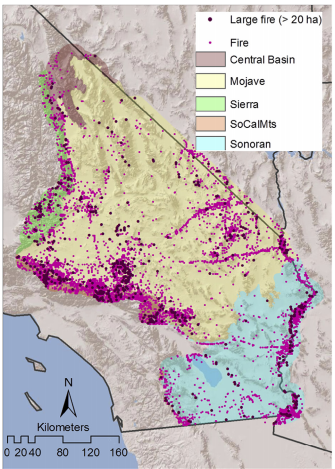
Read MoreStudy results from arid regions in Southern California show how fire trends differ based on unique sets of circumstances. This brief discuses how combinations of direct drivers (like powerline and roadside ignitions), indirect drivers (like invasive grasses, air pollution, and landscape fragmentation terrestrial intactness) and unknown factors cause diversity in fire trends.
Read MoreWildland firefighters suppressing wildland fires or conducting prescribed fires work long shifts and are exposed to high levels of smoke with no respiratory protection. This research measures firefighter exposure to smoke and pollutants and offers way to reduce this exposure.
Read MoreIn an era of concern over climate change, it's important to understand how different kinds of fire-adapted of ecosystems in California may respond to climate change in relation to fire. This study categorized Californian ecosystems into three types and discusses how each may be affected by climate change and fire.
Read MoreThe design and materials used in construction is critical to preventing structure loss during wildland urban interface (WUI) fires. This research helps planners and homeowners by ranking specific construction materials by fire safety effectiveness, then comparing their use to landscape-scale design attributes.
Read MoreOverall, the results of this study add support to the existing theory that diverse fire increases biodiversity in certain ecosystems. Specifically, this study showed that higher diversity of fire severity patterns within a fire lead to more bird diversity, especially in the fire prone semi-arid forests of the Sierra Nevada.
Photo: Nine years after the Moonlight fire in Plumas county, California, the landscape shows remarkable resilience with a diversity of habitat structure and birds. Photo courtesy Morgan Tingley.
Read More
The California Fire Science Consortium is divided into 4 geographic regions and 1 wildland-urban interface (WUI) team. Statewide coordination of this program is based at UC Berkeley.
View the about page to learn more >
This regional Fire Science Exchange is one of 15 regional fire science exchanges.
Link to another exchange: