Early Successional Changes Following Fire in California Chaparral: Research Brief
/Post-fire fundamentals of the recovery process in California chaparral and sage scrub.
View USGS Research Brief PDF >
Read MorePost-fire fundamentals of the recovery process in California chaparral and sage scrub.
View USGS Research Brief PDF >
Read MoreSatellite imagery has potential for assessing fire severity across broad landscapes and diverse vegetation types.
View Research Brief PDF >
This brief is based on a turn-‐of-‐the-century publication which is the first and most complete natural history of chaparral and its relationship to fire.
View Research Brief PDF >
Empirical analysis of fire history data by David Strauss and colleagues confirmed that a relatively small number of forest fires are responsible for a very high proportion of the total area burned.
View Research Brief PDF>
Chaparral plant communities recover after fire quite differently in Mediterranean-type climates versus non-Mediterranean-type climates.
View USGS Research Brief PDF >
To better inform managers, there is a need for research to better explore many facets of WUI fires, including: hazard and risk assessment at small (e.g. community) scales; WUI fire behavior, including structure-to-structure spread; Structure exposure and vulnerability to both firebrands and heat; and Economic cost-benefit analyses of mitigation activities.
View Research Brief PDF >
A major emphasis of the review is the techniques for converting chaparral to grassland using different methods and their related effectiveness.
View Research Brief PDF >
Wells contended that fire was the selective force behind the convergent evolution of the obligate seeding strategy in Arctostaphylos and Ceanothus, and was accompanied by prolific speciation, due in part to a much greater number of sexual generations for seeders than for resprouters.
View Research Brief PDF >
The ability of chaparral species to persist following drastic removal treatments is a function of their life history characteristics and pre-‐treatment abundance.
View Research Brief PDF >
In this paleoecology study of sediments at Point Reyes National Seashore (PORE), Scott Anderson documented changes in vegetation resulting from climate, people and fire over the past 15,000 years.
View Research Brief PDF >
Climate change in California is likely to lead to a decline in alpine/subalpine and conifer forest, woodland, and shrubland extent while promoting grassland dominance.
Read MoreLarge fire events were a normal part of southern California’s natural history based on charcoal evidence.
Read MoreStand-replacing patch size was highly variable in a high elevation mixed conifer forest in the Sierra Nevada with a range of variation dominated by many small patches < 10 acres (4 ha) and few large patches >148 acres (60 ha).
View Research Brief PDF >
This research brief discusses the changes in soil moisture after chaparral was removed in the long and short term.
View Research Brief PDF >
Large, high-intensity wildfires are a natural feature of southern California landscapes and are not directly the result of past fire suppression activities.
View Research Brief PDF >
This report presents a model for manipulating chaparral sites to be more productive for wildlife.
View Research Brief PDF >
The authors conducted prescribed burns in two masticated areas in northern California to assess fire effects in treated stands, compare fire behavior and effects with outputs from commonly used models, and evaluate the ability of mastication to increase stand resilience under a range of hypothetical wildfire scenarios.
Read MoreIn this paper, Agee and Skinner reviewed related literature, simulated fire behavior in different treatment types, and considered five real-‐world examples of fuels treatments and wildfire. Using these methods, they distilled a set of basic principles underlying effective treatments that reduce fuels and limit wildfire severity and extent.
View Research Brief PDF >
This study assessed the effects of both prescribed burning and stand structure management through thinning on bark beetle activity and associated levels of tree mortality.
Read MoreThis 2011 review synthesizes the growing body of scientific literature on the carbon balance of fuel treatments (i.e. the ability of treatments to achieve net carbon offsets.) The purpose of this synthesis is to highlight research relevant to forest managers and policymakers interested in the potential for forest management to contribute to climate change solutions.
View Synthesis PDF >

The California Fire Science Consortium is divided into 4 geographic regions and 1 wildland-urban interface (WUI) team. Statewide coordination of this program is based at UC Berkeley.
View the about page to learn more >
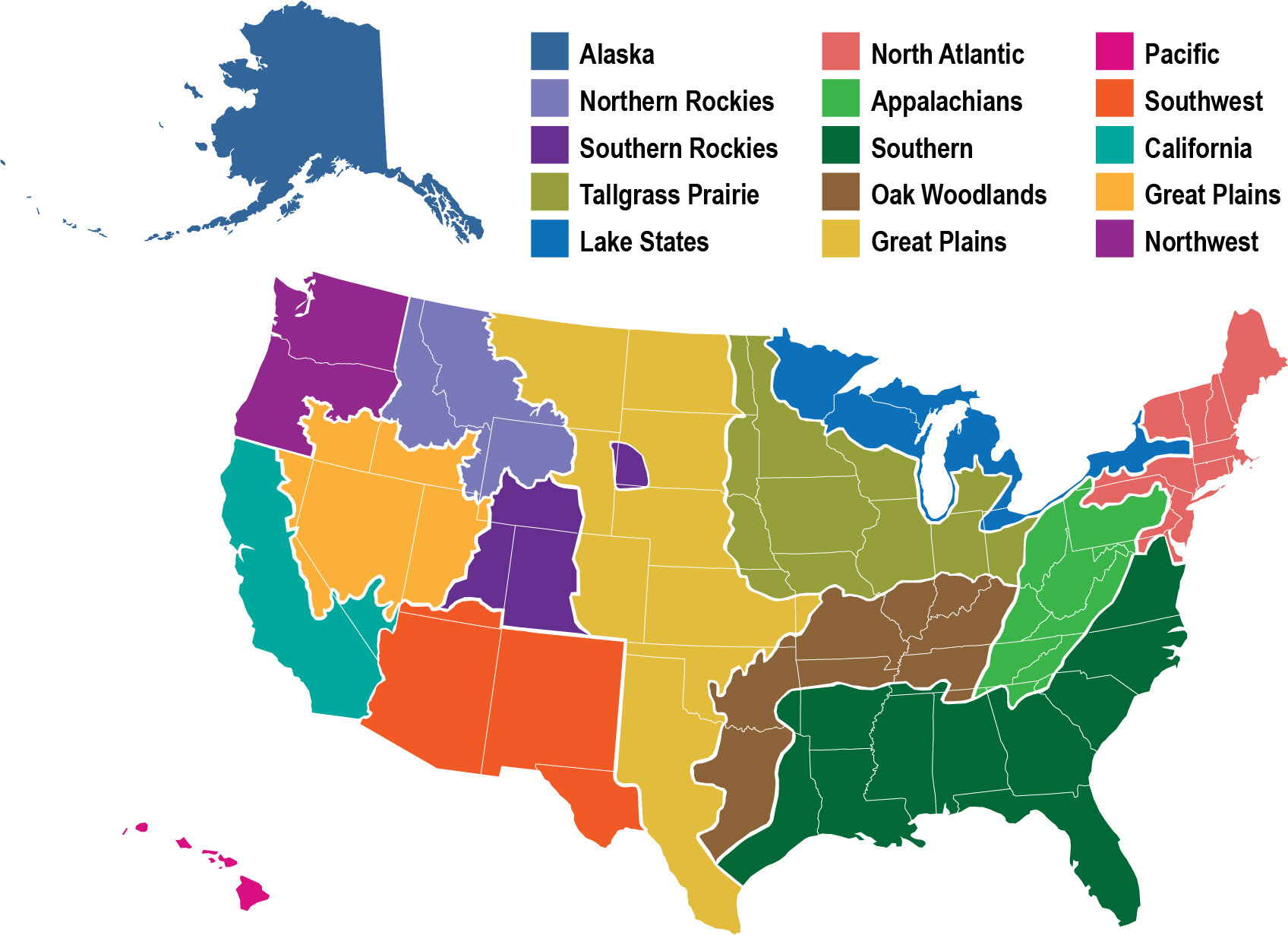
This regional Fire Science Exchange is one of 15 regional fire science exchanges.
Link to another exchange: