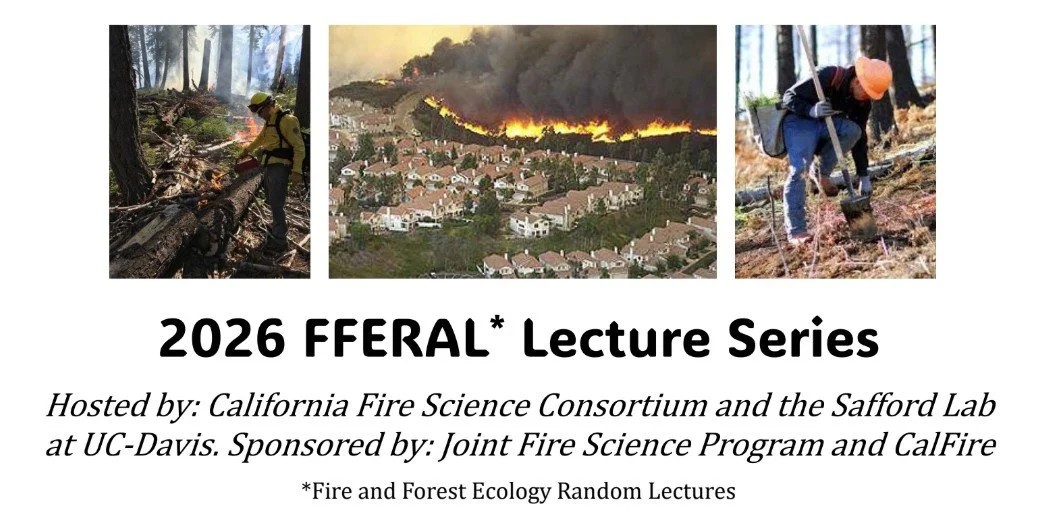
2026 FFERAL Lecture Series
The FFERAL lecture series returns in early 2026 with an exciting lineup of presenters. Join us in person at UC Davis or virtually via Zoom.
UCCE and American Forests Launch Private-land Reforestation Opportunity Tool
Join us to explore a new tool developed by American Forests and the UC Cooperative Extension that supports post-fire reforestation planning across California’s private non-industrial forestlands (PNIFL). The application maps wildfire-impacted parcels and identifies reforestation and restoration opportunities statewide on PNIFL, highlights demographic and social factors, and overlays existing reforestation programs and workforce capacity.
For the inaugural talk of the 2024 FFERAL lecture series, Professor Don Hankins discusses ecocultural stewardship of oak woodlands and riparian forests for diverse outcomes.
Given the increasing severity of wildfires and their associated impacts across the country, there is significant attention on the tools that are available to address these challenges. Recent research highlights that conservation and restoration of freshwater ecosystems may play an important, yet overlooked, role in wildfire management. This presentation will provide an introduction to the current scientific understanding of the nexus between freshwater ecosystems–including the role of beaver dam or beaver dam analog-created wetlands–and wildfire, opportunities for additional research, and how this information can be best used to enact policy change.
Seeking knowledgeable members of the fire community to oversee our edits.
The California Fire Science Seminar Series will return on February 4th, 2025. Join us every Tuesday through March 18th at 10 am PT for virtual presentations and discussions on emerging fire science topics from a range of topics and speakers.
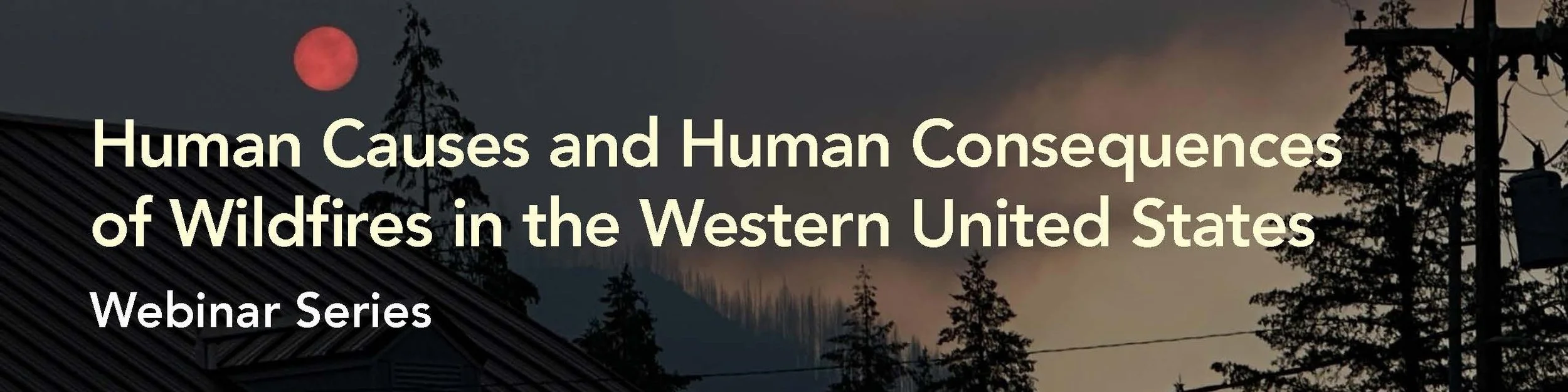
Join us for an engaging three-day webinar series titled Human Causes and Human Consequences of Wildfires in the Western United States. This event is organized by the six regional exchanges of the Joint Fire Science Program's Fire Science Exchange Network: the Northwest Fire Science Consortium, Great Basin Fire Science Exchange, California Fire Science Consortium, Northern Rockies Fire Science Network, Southern Rockies Fire Science Network, and Southwest Fire Science Consortium.
The California Fire Science Seminar Series will return on February 6, 2024, at 2 pm. Join us for the biweekly, virtual presentation and discussion on emerging fire science topics from a diverse range of topics and speakers. Sign up for the California Fire Science Seminar Series newsletter below to receive updates.
Seminars will be held every other Tuesday from 2pm to 3pm.
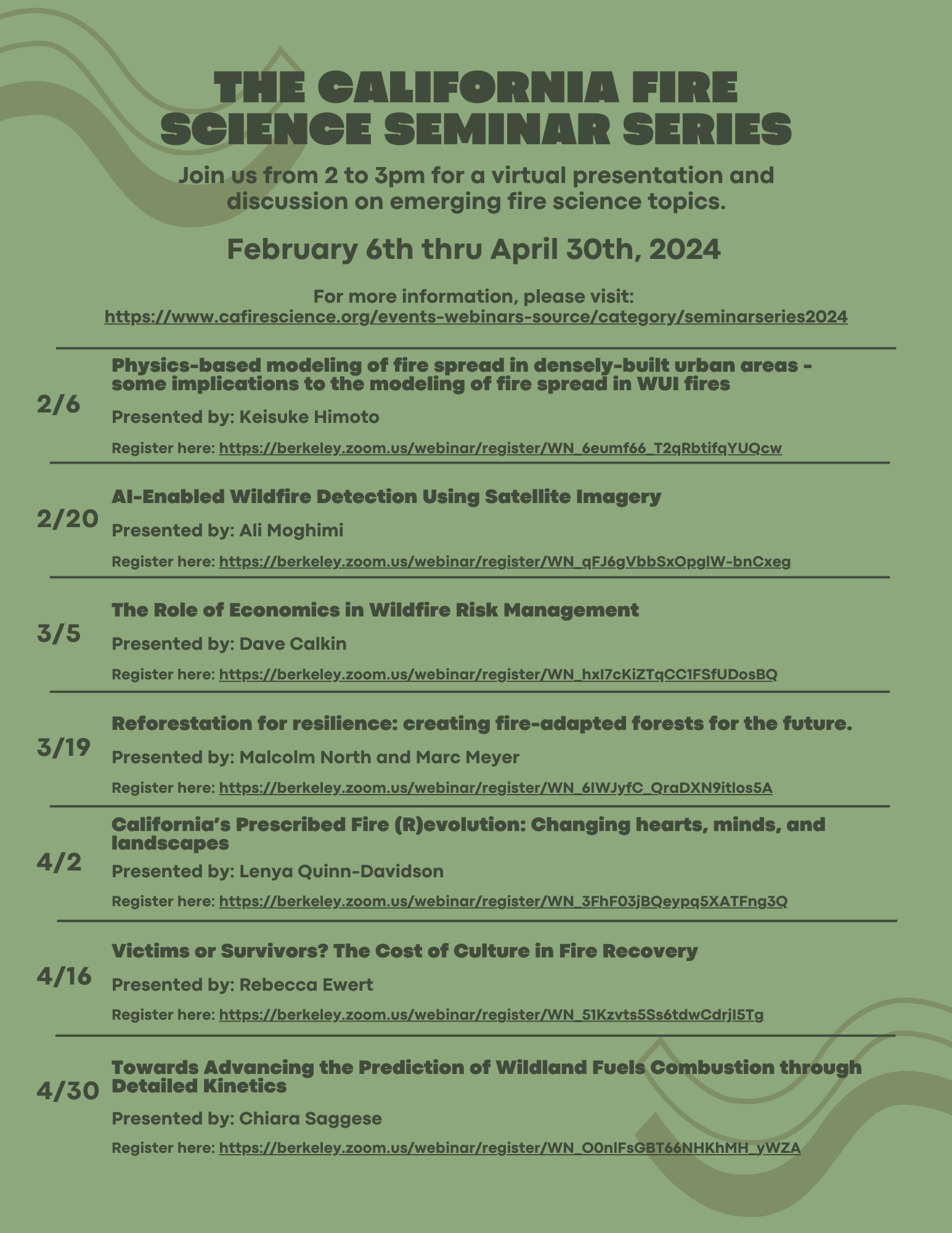
February 6th, 2024: Physics-Based Modeling of Fire Spread in Densely-Built Urban Areas - Some Implications to the Modeling of Fire Spread in WUI Fires
February 20th, 2024: AI-Enabled Wildfire Detection Using Satellite Imagery
March 5th, 2024: The Role of Economics in Wildfire Risk Management
March 19th, 2024: Reforestation for Resilience: Creating Fire-Adapted Forests for the Future
April 2nd, 2024: California’s Prescribed Fire (R)evolution: Changing Hearts, Minds, and Landscapes
April 16th, 2024: Victims or Survivors? The Cost of Culture in Fire Recovery
April 30th, 2024: Towards Advancing the Prediction of Wildland Fuels Combustion through Detailed Kinetics
May 15th, 2024: Developing a Practical Physical Wildfire Behavior Model
Date: February 6, 2024
Abstract: Urban fires pose a persistent hazard in Japanese urban areas. To address this, various fire spread models have been developed, with many relying on empirical formulations. However, to enhance model generality, a shift towards physics-based formulations is explored. Yet, computational methods like CFD, grounded in fundamental physics equations, are computationally demanding and face limitations in large-scale applications like urban fires. This necessitates the development of models effectively incorporating less computationally demanding procedures, such as engineering correlations based on experiments. In this seminar, a fire spread model developed under such constraints will be presented. While urban fires are rare outside Japan, the fire spread mechanisms in urban areas share commonalities with WUI fires. Therefore, the framework of the fire spread model for urban fires is applicable to WUI fires.
Presenter: Keisuke Himoto, Dr.Eng., is a senior researcher at the National Institute for Land and Infrastructure Management in Tsukuba, Japan. His research interests cover a broad range of fire safety issues in the built environment but with a special focus on large outdoor fires. He is the developer of various fire-related computational models, including one of the first physics-based computational models for fire spread in densely built urban areas.
Date: February 20, 2024
Abstract: Wildfires in California have grown in size and intensity since the 1980s, causing significant damage to the environment and human communities. Our study is focused on developing a deep-learning framework for detecting and monitoring wildfires using satellite imagery. Utilizing the Sentinel-2 satellite, we harnessed multispectral data across various bands with resolutions ranging from 10m to 60m. Specifically, bands 12 (SWIR, 2190 nm), 11 (SWIR, 1610 nm), and 4 (Red, 665 nm) were critical in our analysis due to their sensitivity to high temperatures and their ability to penetrate smoke, providing spectral information even through dense smoke that could obscure traditional RGB imaging. Our methodology involved the creation of a large-scale dataset downloaded through Google Earth Engine, comprising over 50 high-resolution images (1792x1792 pixels), which were further divided into 2450 smaller images for enhanced model training efficiency. Label Studio was employed for fire segmentation to produce accurate masks for our U-Net-based segmentation model. Data augmentation techniques were applied to triple our dataset, yielding 7350 images. About 65% of images were allocated for training, 15% for validation, and 20% for model testing. We trained a U-Net deep learning model, known for its effectiveness in image segmentation with multiple convolutional layers, dropout layers, and max pooling layers, totaling 1,941,105 trainable parameters. Training over 100 epochs demonstrated consistent model accuracy and minimal loss. Key performance metrics include an accuracy of 98.47%, precision of 90.76%, recall of 80.47%, and an F-score of 85.31%. The success of this approach demonstrates the compelling capabilities of combining advanced deep learning techniques with multispectral satellite imagery for effective wildfire monitoring, offering an invaluable tool for disaster management and environmental conservation.
Keywords: Wildfire Detection, Satellite Imagery, Sentinel-2 Satellite, Deep Learning, U-Net, Image Segmentation
Presenter: Dr. Ali Moghimi is an Assistant Professor of Teaching in the Department of Biological and Agricultural Engineering, where he is the lead faculty advisor for the Agricultural and Environmental Technology major. Ali teaches a wide range of courses, including, TAE 10 (introduction to Technology), TAE 30 (communications and Computing Technology), ABT 60 (introduction to drone technology), ABT/LDA 150 (introduction to geographical information systems – GIS), and ABT/HYD 182 (Environmental Analysis using GIS). Ali’s research interests include remote sensing, GIS, and applied machine learning and deep learning.
Date: March 5, 2023
Abstract: Despite the growing impacts, interest and investment in wildfire traditional economic tools such as cost modeling, cost benefit analysis, and cost effectiveness have played a relatively limited role in informing wildfire management. High levels of uncertainty associated with a dynamic fire environment, variation in fire weather across space and time, disagreement around priorities and values that are impacted by wildfire, and the design and culture of organizations charged with implementing wildfire management make risk management a more appropriate framework for implementing and understanding wildfire management decision making. This is not to suggest that economics is not important, it plays a critical role in informing many aspects of the risk management cycle. In this presentation, I will discuss some of the challenges applying economics and highlight some of the key concepts that are helping us better understand the challenges and opportunities of wildfire management.
Presenter: Dave Calkin is a supervisory research forester at the Human Dimensions Program of the US Forest Service Rocky Mountain Research Station in Missoula, Montana. He co-leads the Wildfire Risk Management Science team (https://www.fs.fed.us/rmrs/groups/wildfire-risk-management-team) working to improve risk based fire management decision making through improved science development, application, and delivery. His research incorporates economics with risk and decision sciences to explore ways to evaluate and improve the efficiency and effectiveness of wildfire management programs.
In 2023 Dave received the Ember Award from the International Association of Wildland Fire for sustained achievement in wildfire research. He received a BS in applied math from the University of Virginia, an MS in natural resources conservation from the University of Montana, and a PhD in Economics from Oregon State University.
His Google Scholar profile is available at: http://scholar.google.com/citationsuser=pswd8h4AAAAJ&hl=en
Date: March 19, 2024
Abstract: Wildfires are becoming an increasing issue, raising concern about direct infrastructure and property damage as well as indirect effects related to their emissions. In this context, a fundamental understanding of the burning processes of wildland fuels is crucial for the modeling and prediction of both fire behavior as well as related emissions. Current fuel consumption parameterizations used in wildfire models usually oversimplify fuel consumption processes, such as flaming and smoldering combustion regimes, and fuel properties, like fuel elements' size and moisture content. In this seminar, a physics-based modeling framework developed to describe biomass combustion and emissions will be presented. Biomass is represented through its fundamental constituents, such as lignin, cellulose, hemicellulose, water, and extractives. A detailed reaction kinetic model is coupled with a multi-region single-particle model and is adopted to investigate the process of biomass degradation, including char oxidation. The validation of the modeling framework with experimental data from literature is performed at various scales, including thermogravimetric experiments and particle-scale experiments of pyrolysis and combustion. Additionally, preliminary results of its applicability for the construction of detailed parameterizations for large-scale wildfire applications, such as WRF-SFIRE coupled atmosphere-fire model, will be discussed.
Presenters: Malcolm North is a Research Forest Ecologist with the U.S. Forest Service Pacific Southwest Research Station, and an Affiliate Professor of Forest Ecology, Department of Plant Sciences at the University of California, Davis. He received his Master of Forest Science at Yale University and his PhD in Forest Ecology from the University of Washington. His research includes work on examining forest restoration and ecosystem response, wildlife, wildfire and forest carbon dynamics published in more than 200 articles. His lab (students and postdocs) primarily focus on forest and fire ecology of Sierra Nevada mixed-conifer forests.
Marc Meyer is the Southern Sierra Province Ecologist with the USDA Forest Service Pacific Southwest Regional Ecology Program and serves the Inyo, Sierra, and Sequoia National Forests. His work focuses on integrating science information into land management and project planning in the southern Sierra Nevada. Marc has a Ph.D. in ecology from the University of California Davis and has many years of experience studying the effects of fire and other restoration treatments on California’s ecosystems. He has published many peer-reviewed science articles in ecology, including the GTR-270 postfire restoration framework for national forests in California.
Date: April 2, 2024
Abstract: Prescribed fire has undergone major transformation in California over the last decade or two, evolving from a mostly agency-led practice with limited visibility to a statewide grassroots movement, engaging and being led by a diversity of partners, including NGOs, ranchers, Indigenous practitioners, and other community leaders. This movement has been simultaneously organic, bubbling up at the local level, and impressively strategic, pairing local community organizing with state-level liability changes, new qualifications pathways for practitioners, and major investments in cutting-edge concepts, like the state’s $20 million Prescribed Fire Claims Fund. The change during this period has been monumental, representing an evolution in the way we think about and implement prescribed fire in California, but it also represents a revolution—the result of a groundswell of passion, purpose, and pressure from the most affected communities. This presentation will share insights on California’s prescribed fire evolution/revolution, and reflect on where it might go from here.
Presenter: Lenya Quinn-Davidson is the Fire Network Director for the University of California Agriculture and Natural Resources. Lenya’s focus is on the human connection with fire, and increasing resiliency of California’s landscapes and communities. Lenya works at various scales, including locally with private landowners and communities members; at the state level, where she leads UCANR’s Fire Network and collaborates on policy, research, and community-based burning; and nationally/internationally, through her leadership on Women-in-Fire Training Exchanges (WTREX). Lenya is passionate about using fire to inspire and empower people, from ranchers and scientists to agency leaders and young women, and everyone in between.
Date: April 16, 2024
Abstract: As fire disasters in California increase in severity and frequency, the costs accumulate for federal, state, and local governments, insurers, residents, and communities. While the costs of wildfires are difficult to quantify, the 2018 Carr fire in Shasta County, CA resulted in costly evacuations of approximately 38,000 people, the ecosystem loss of 229,651 acres, destruction of 1,077 homes and the generational equity represented therein, $162 million in firefighting costs, and an estimated $1.6 billion in damages. At the time, this was the sixth largest fire in California history and necessitated a coordinated recovery response by government agencies and nongovernmental groups. This seminar presentation draws on extensive qualitative data – 134 in-depth interviews and six months of ethnographic observation with Carr fire recovery organizations – to document mechanisms by which the costs of this disaster are borne unequally by residents. I demonstrate how local and visiting aid workers’ normative assumptions about legitimate victimhood structure survivors’ access to resources and produce inequalities in disaster recovery. I conclude with a discussion of how gender, race, and age intersect with socioeconomic class in the production of disaster recovery inequalities. As climate disasters become increasingly prevalent worldwide, it is imperative that ecologists, fire management agencies, social service providers, health professionals, and social scientists study the processes that produce unequal disaster recovery outcomes and propose interventions that can mitigate these disparities.
Presenter: Rebecca Ewert is an Assistant Professor of Instruction in Sociology at Northwestern University. Her research interests include mental health, disasters, culture, inequality, and qualitative methods. Her work explores how people of different social groups (classes, genders, ages, and races) recover economically, socially, and emotionally from disasters. More about her work can be found on her website: www.rebeccaewert.com.
Date: April 30, 2024
Abstract: Wildfires are becoming an increasing issue, raising concern about direct infrastructure and property damage as well as indirect effects related to their emissions. In this context, a fundamental understanding of the burning processes of wildland fuels is crucial for the modeling and prediction of both fire behavior as well as related emissions. Current fuel consumption parameterizations used in wildfire models usually oversimplify fuel consumption processes, such as flaming and smoldering combustion regimes, and fuel properties, like fuel elements' size and moisture content. In this seminar, a physics-based modeling framework developed to describe biomass combustion and emissions will be presented. Biomass is represented through its fundamental constituents, such as lignin, cellulose, hemicellulose, water, and extractives. A detailed reaction kinetic model is coupled with a multi-region single-particle model and is adopted to investigate the process of biomass degradation, including char oxidation. The validation of the modeling framework with experimental data from literature is performed at various scales, including thermogravimetric experiments and particle-scale experiments of pyrolysis and combustion. Additionally, preliminary results of its applicability for the construction of detailed parameterizations for large-scale wildfire applications, such as WRF-SFIRE coupled atmosphere-fire model, will be discussed.
Presenter: Chiara Saggese received her PhD in Industrial Chemistry and Chemical Engineering from Politecnico of Milan in 2015. After working as a postdoctoral fellow on experiments and kinetic modeling of real fuel combustion chemistry and emissions at Stanford University, she joined the Reaction Dynamics Group in Lawrence Livermore National Laboratory in 2019. Her research activity spans from the development of kinetic models of conventional and sustainable fuels to the kinetic modeling of pollutants formation in combustion processes. Within the current transition to a decarbonized transportation system, she is focusing on modeling soot formation from sustainable aviation fuels. Lately, her research focus has expanded to the investigation of wildland fuels combustion and emissions to inform sub-models present in large-scale wildfire applications.
Date: Wednesday, May 15th, 2024
Abstract: Wildland fire behavior prediction relies upon empirical modeling that has been operationalized for many decades. Although research has yielded many possible physical models, none have yet been seriously considered as replacements for operational uses. The reasons include incomplete physical understanding, overly complicated or intensive solutions given the practical client needs, and lack of input data. Long-standing research at the Missoula Fire Sciences Laboratory has sought to develop the basic understanding of physical processes in wildland fire using laboratory and field research and match the knowledge generated to a model formulation that would advance predictive capability but not burden users with undue complexity or computational requirements. This talk will overview the experimental work and modeling results.
Presenter: Mark A. Finney is a Senior Scientist and Research Forester with the US Forest Service, Rocky Mountain Research Station, Missoula Fire Sciences Laboratory. He has devoted his career to understanding fire as an ecological and physical process and has conducted research on prescribed burning and fuel treatment effects across the western United States. His wildfire modeling forms basis for operational wildfire predictions throughout the US. He holds a Ph.D. in wildland fire science from Univ. California at Berkeley (1991), an M.S. in Fire Ecology from University of Washington (1986), and a B.S. in Forestry from Colorado State University (1984).
Recordings of presentations are available here: 2024 California Fire Science Seminar Series - YouTube
Recordings of past presentations are available here: CA Fire Science Seminar Series - YouTube
The California Fire Science Seminar Series is organized and supported by the Berkeley Fire Research Group, College of Engineering, University of California, Berkeley; the University of California, Merced and the California Fire Science Consortium. The planning committee includes Michael Gollner (UC Berkeley), Crystal Kolden (UC Merced), Jeanette Cobain (UC Merced), Scott Stephens (UC Berkeley), Autym Shafer (UC Berkeley), and Katanja Waldner (UC Berkeley). The student committee who assisted with planning includes Ajinkya Desai (UC Irvine), Andrew Johnson (UC Berkeley), Ankit Sharma (Case Western Reserve), Ashkan Teymouri (UC Davis), Ashley Cale (UN Reno), Ashley Duran (UC Berkeley), Caden Chamberlain (UW), Dylan Moore (UC Davis), Elena Kaminskaia (UC Riverside), Joyce Ho (UMich), Katrina Sharonin (UC Berkeley), Monica Antonio (UC Berkeley), Nathaniel Brockway (UAF), Nick Graver (UC Riverside), Nitin Kumar (UC Davis), Shaorun Lin (UC Berkeley), Shu Li (UC Irvine), Trevor Haltermann (Cal Poly Humboldt), Yiren Qin (UMD).
Controlling fire was the first major technological advance made by early humans. These days, fire is still used as a management tool, but (usually!) under more prescribed conditions than in the Paleolithic. Prescribed fire is carried out in many different countries, by a wide variety of people, under a wide variety of circumstances. It is used on all of the inhabited continents, by trained professional personnel, resource managers, researchers, ranchers and farmers, pastoralists, indigenous peoples, and private citizens. Among other things, prescribed fire can maintain or alter ecosystems, create or destroy habitat, promote wildlife populations or livestock populations, control weedy plants or liberate native species, restore ecosystems, and meet important sociocultural needs. And after a century of more of repression, fire use in management is experiencing a renaissance. Taken in sum, there is a huge diversity in prescribed burning purposes, principles, policies, and practices that can serve to incentivize and inform fire use around the world. In this webinar series, we present a survey of prescribed fire from around the globe, focused on seven topic areas: fuel management; rangeland and landscape management; management of production forests; wildlife management; monitoring and datasets; and ecological restoration and cultural fire.
February 27, 2024: Worldwide view on prescribed fire. Where are we?
April 2, 2024: Preparing for the “big one”: prescribed fire as a strategic fuel reduction tool
April 23, 2024: Traditional and long-time use of prescribed fire
Future dates to be announced
My career as an illustrator of landscapes where fire passes or has passed, as well as other natural phenomena was born before the ashes of the Horta de Sant Joan wildfire accident (2009, Spain). But a few years later, it gained momentum and materialized in the ART&FIRE collection at the Pau Costa Foundation's hands. Since then, interest in representing figuratively and abstractly has grown as the potential of the new extreme wildfires has grown. All the tasks carried out obey a non-profit intention and are in the line of "artivism" in terms of social awareness about the role that each of us must play in preventing these phenomena that have already reached a ceiling in the capacity of extinction. I try in most cases to talk about fire visually but without being too catastrophist or utopian. This series is no exception.
Signs of works in progress in the front line control /Rx.fires framework/. This is a fiction-based ortoview representing through the machinery trails among the sleeves. The illustration is a conceptual work rather than a figurative scenario trying to reach the famous Golden Ratio. Digital tech artwork. JSerra
art by Josep serra
February 27, 2024 900 PST | 1800 CET
In the inaugural seminar of this series, four fire experts will provide an overview of prescribed fire from different viewpoints, disciplines, and regions. They will discuss the role of prescribed fire in ecosystems, connections to culture and community, best practices and performance metrics for evaluating outcomes, and they will speculate on the future of prescribed fire. This overview will provide a foundation for future seminars, each of which will cover these topics in greater depth.
Presented by:
Marc Castellnou, Wildland Fire Incident Commander and Fire Analyst, Catalan Fire Service, Spain
Paulo M. Fernandes, Associate Professor, Universidade de Trás-os-Montes e Alto Douro, Portugal
Morgan Varner, Director of Fire Research, Tall Timbers, USA
Luisa Alfaro, United States Agency for International Development (USAID), Office of Foreign Disaster Assistance, Costa Rica
Here my target is to represent the controlled fire by FIREFIGHTERS ALONG THE PLAINS in a way IN WHICH IF YOU look upwards, the smoke coming from these Rx fires could be that coming FROM ACTIVE wildland fire. Thus IS A way to emphasize that we are using the same chemical reaction for prevention purposes. Digital tech artwork. JSerra
art by Josep serra
April 2, 2024 900 - 1030 PST | 1800 - 1930 CET
Wildfires are becoming bigger and more severe around the world, overwhelming firefighters’ capacity to control them. Prescribed fires can be used to safely introduce fire in the landscape and regulate fire regimes through fuel management and by building landscape resilience. Is this approach working?
This week, four fire experts will discuss how fire and resource managers are using prescribed fire to prevent wildfire spread. They will discuss strategic goals and tactics, tradeoffs between broad landscape resilience and local fuel management, and whether prescribed fire intensities are enough to affect outcomes.
Presenters:
Tessa Oliver Manager of the Western Cape Umbrella Fire Protection Association, South Africa
Jorge Andres Saavedra Corporacion Nacional forestal, CONAF, Chile
Marta Miralles, Catalan Fire Service, Spain
Stephen Fillmore, Fuels Operations Specialist USDA Forest Service, Pacific Southwest Region, USA
Prescribed fires IN THIS drawing adopt here an interesting view with slope UP AND down to express that Rx fires are ALSO USED in that complex topographies, in that case in different timelines. This give us a peculiar RESULTING LANDSCAPE in A WAY of mosaicism OF COLOR COMBINING BLACK and white but it COULD BE also IMAGINED AS green/black duality. Ink tech. J Serra
art by Josep serra
April 23, 2024 900 - 1030 PST | 1800 - 1930 CET
Fire is still used as a cultural process and management tool in different regions worldwide. We focus on the examples of the Pyrenees, northern Spain and the open forests of South America. In these areas, local communities of shepherds, farmers, and hunters have continued to use fire actively as an uninterrupted landscape management tool for millennia.
However, the loss of local knowledge and the abandonment of rural areas have led to a decline in this practice. Once this knowledge is lost, it is difficult to recover. The knowledge has been passed down from generation to generation, and fire is not just a technique; it is also linked to day-to-day life, myths, and festivities.
Presenters:
-Eric Rigolot, Unité de recherche Écologie des Forêts Méditerranéennes (URFM), France
-Luis Alfonso Perez, Fire Service of the Asturias region, Spain
-Dario Coria, Instituto Nacional de Tecnología Agropecuaria (INTA), Santiago del Estero, Argentina
The International Prescribed Fire Webinar Series is organized and supported by California Prescribed Fire Monitoring Program, a collaboration between CalFire and the Safford Lab at the University of California-Davis; and the California Fire Science Consortium.
Recent destructive wildfires in northern California provide an opportunity to investigate how different factors influence home survival. We conducted an analysis of the 2018 Camp Fire, obtaining measurements from a randomly selected subset of homes in Paradise, to determine if nearby burning structures and/or nearby vegetation contributed to home survival, and whether new building codes in place since 2008 helped. The findings, corroborated by photographs taken of damaged but not destroyed homes, point to changes that could substantially improve outcomes.
This presentation will summarize a literature review conducted by a team of scientists from across western North America on the topic of climate change and western wildfires. Rapid climate change is bringing warmer, drier, longer wildfire seasons to our region. In fire-dependent forests, these wildfires are burning in fuels that built up during more than a century of policies that favored fire exclusion. Consequently, wildfires have been increasing in severity and area-burned. We focused our review around ten common questions about adaptive forest management and how it can be used to assist climate and wildfire adaptation. The first of these questions addressed how fire exclusion transformed western forests and left them more vulnerable to drought, insects and disease agents, and wildfires.
The CA Fire Science Seminar will be a monthly presentation and discussion on emerging fire science topics from a diverse range of topics and speakers. Our next seminar will be August 16 on “Wildfire impacts on water infrastructure”
Following the 2020 Bobcat Fire in the San Gabriel Mountains, the SGVCOG identified a need for a regional program to provide wildfire adaptation and prevention resources to cities and residents. To mark the launch of this program, the SGVCOG is bringing together expert panelists to discuss how cities and communities can help support successful wildfire programs and prevent future wildfires.
Recordings are available at: sgvcog.org/wildfiresummit
The ACCG Monitoring workgroup and the SOFAR Landscape Design Team is hosting a symposium that will highlight ongoing monitoring and research in the Power Fire and its application in post fire restoration planning (e.g. Caldor Fire).
Join the authors of the recent publication “Operational resilience in western US frequent-fire forests” for a discussion and presentation about the latest recommendations and considerations for managing forests for resilience.
Accurate monitoring of forest activity is an essential component of sustainable forest management, but effective monitoring is an ongoing challenge in forests globally. The USDA Forest Service (USFS) and State of California committed to treating 500,000 acres annually for a total of 1,000,000 acres per year by 2025. In this webinar, Dr. Knight highlights new findings on the State’s progress, the management implications of these results, and how accurate tracking methodology can be applied to new settings.
View recording here >
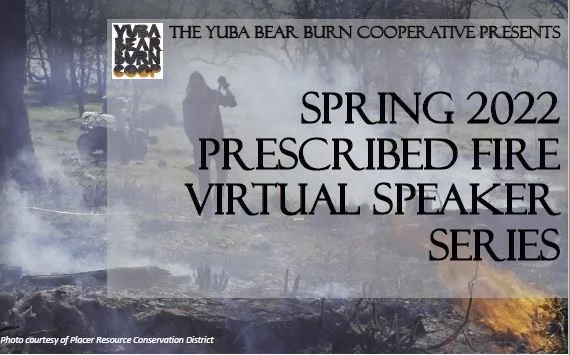
This group is hosting a prescribed burn planning event in April and an ongoing virtual series presented on the second Wednesday of each month through May 2022.
This program is provided in a collaboration between the Natural Areas Association (NAA) and the Xerces Society for Invertebrate Conservation (Xerces). This will be a one day virtual event with early bird rates of $29 (member)/$49 (non-member) rates available until Sept 8, 2021.
More information and registration here >
In this webinar, we will present results from a simulation study of the southern Sierra Nevada Mountains that investigated the relative effectiveness of a variety of fuel treatment strategies and the tradeoffs of implementing fuels programs with competing management goals.
California Fire Safe Council invites you to their first Resilience Brilliance Awards Sponsored by Perimeter Solutions & Annual Conference October 5 & 6, 2021
The conference, supported in part by the Regional Forest and Fire Capacity group (RFFC), will be held October 6 and convene mitigation groups around educational and best practices forums and seminars.
Click HERE for more information on attendance, nomination instructions, hotel location, and reservation information.
Three separate workshops highlighted case studies of successful grazing contracts and partnerships across the state. Watch the recorded sessions on youtube here >
The National Training and Education Division will host the 23 rd Annual Emergency Management Higher Education (HiEd) Symposium in partnership with the Emergency Management Institute (EMI) and the Center for Homeland Defense and Security (CHDS) on June 8–10, 2021, via Zoom.
This webinar will discuss the outcomes of the 2019 Caples Fire, fire effects on legacy trees, fire management take-home messages, volunteer efforts for restoration within the Caples watershed, and avian research within the Caples restoration area.
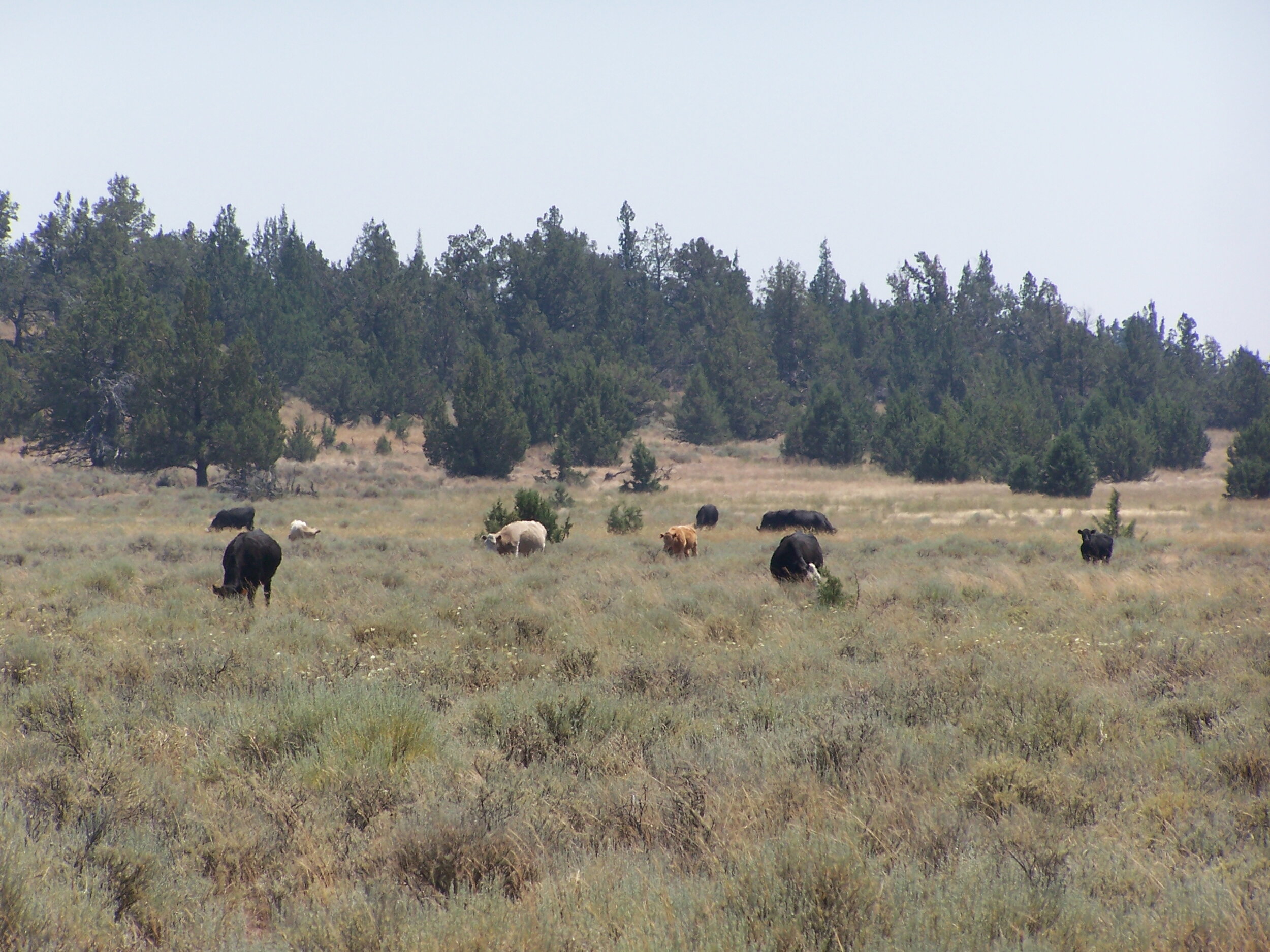
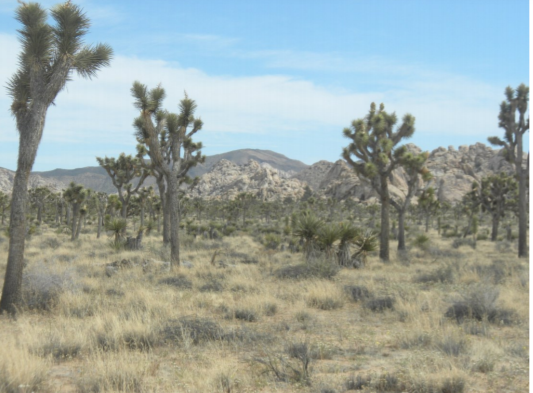
Please join us on Monday, May 3, 1:00 - 2:00 PDT for this presentation on several Mojave Desert restoration research projects conducted by Dr. Abella’s lab. The talk will cover effective techniques for native plant restoration in challenging arid environments.
To register, please contact Judy Perkins at: jlperkins@blm.gov . This event is free and open to the public.
This is the second Fire Weather Research Workshop at San Jose State University with the aim of providing the latest information and current state-of-knowledge on fire weather research to fire management agencies, scientists, students and other stakeholders. Following from our successful first workshop in 2019, this year we have extended the speaker list to our colleagues and partners across the world to provide an international perspective on current fire weather research.
Join the USDA Forest Service April 5-9, 2021 for the next series of Forest Service SCIENCEx webinars!
Daily webinars presented by Forest Service scientists and experts will showcase research and best practices for post-disturbance restoration across the country.
This year's William Main Seminar series through UC Berkeley will be held virtually, and is open to all. This series will be held on select Tuesdays at 4:00-5:30PM.
This new online seminar series will cover the breadth of wildland fire research relevant to California and introduce researchers to new topics and research groups across the state. The series will be held weekly, every Tuesday from 3:00 – 4:00 pm (PST).
View more information and registration at https://frg.berkeley.edu/california-fire-science-seminar-series/
Webinar Recording now available!
Join us to learn about how environmental variation influences active tree planting success relative to passive natural regeneration.
Post-Fire Water Quality Impacts and Mitigation webinar
LEARN MORE AND REGISTER
Please join us in a virtual workshop to explore the latest scientific evidence for the interconnectedness of climate change and its impacts. CalEPA's Office of Environmental Health Hazard Assessment is convening this workshop, which will feature presentations from leading researchers and representatives of tribes and community organizations. Workshop participants will be provided with an opportunity through an online communication platform to submit questions and comments throughout the workshop. Registration, agenda, and more information >
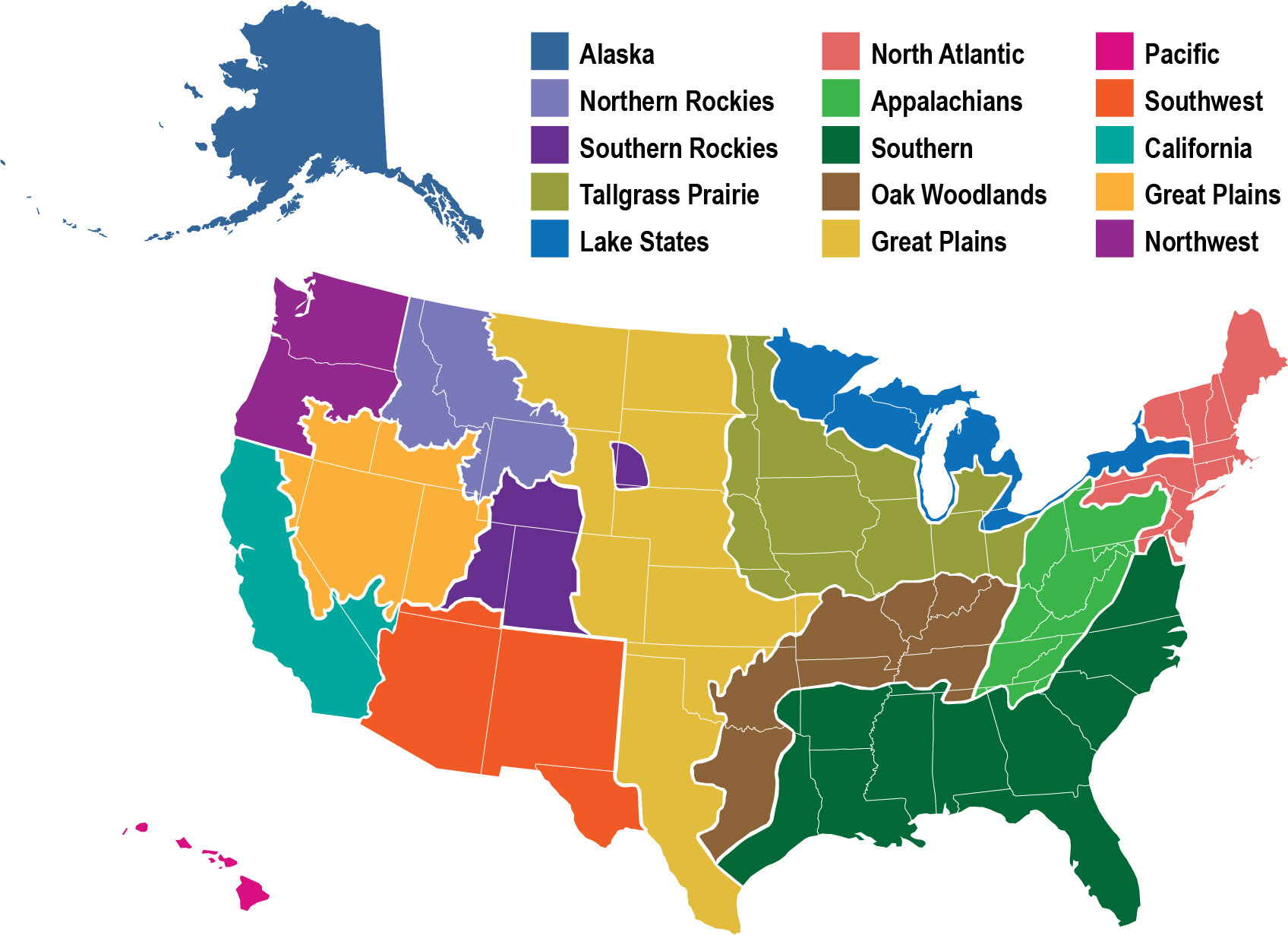
The California Fire Science Consortium is divided into 4 geographic regions and 1 wildland-urban interface (WUI) team. Statewide coordination of this program is based at UC Berkeley.
View the about page to learn more >
This regional Fire Science Exchange is one of 15 regional fire science exchanges.
Link to another exchange: