Past Lectures
What Works, Where, and For How Long? Empirical Insights on Fuel Treatment Effects and Effectiveness In California Forests
Presenter: Katharyn Duffy, PhD
Abstract: Land managers and practitioners need reliable, empirical evidence about which forest treatments reduce wildfire impacts—and how long those benefits persist. This seminar introduces a framework designed to meet that need. Part 1 presents findings from Yackulic et al. (2025), which use a natural-experiment design in the Central Sierra to show how thinning and prescribed fire reduce biomass loss moderate fire severity, and improve forest retention. Part 2 highlights expanded methods now applied across regions, treatment types, and ecosystem processes. By integrating extensive treatment records with remote-sensing time series and counterfactual controls, we quantify treatment effectiveness over its full lifespan—from changes in fire behavior to shifts in ecosystem water use and post-fire recovery. These results offer tangible performance metrics that can inform project design, build trust in proactive management, and support multi-benefit planning at landscape scales.
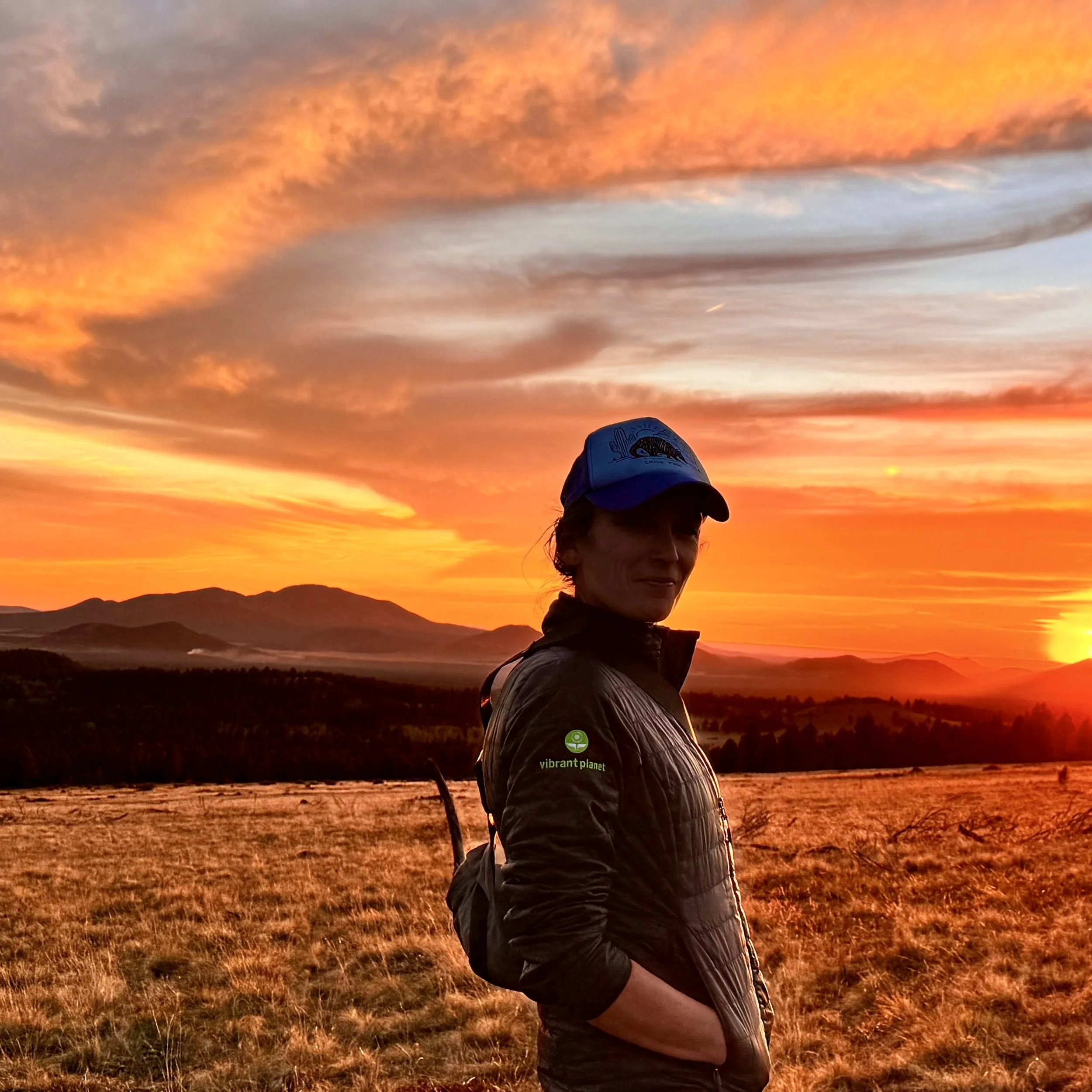
Bio: Dr. Katharyn Duffy is a Senior Scientist at Vibrant Planet and an Adjunct Faculty member in Ecoinformatics at Northern Arizona University. Her work integrates empirical observations, remote sensing, and ecological data science to quantify the realized effects of forest management interventions across Western landscapes. Her group’s research focuses on how fuel treatments and fire use restore ecosystem function, influence wildfire severity, and change recovery trajectories across a range of potential measures including forest retention, ecosystem water use, and drought resilience. Dr. Duffy collaborates with federal, state, tribal, and community partners to integrate evidence-based approaches into proactive management, multi-benefit planning, and climate-resilient forest stewardship in California and beyond.
Navigating the Chaos: Risk Analysis, Decision Support, and Community Hardening Frameworks for Catastrophic Wildfires
Date: January 28 Time: 3:00 - 4:30 pm PST Location: Wickson Hall 1017 UC Davis or via Zoom
Presenter: Matt Thompson, PhD
Abstract: The escalating frequency and damage of catastrophic fires are accelerating faster than social systems can adapt, presenting disruptive and systemic risks. What was once largely thought of as a wildlands and wildfire management problem—leading to fire control as the solution—needs to be understood as one where fire is both natural and inevitable, and with a shifted focus to structural vulnerability and ignition resistance of communities. Layered mitigation approaches are necessary, blending targeted fuels management with home and community hardening. So too are risk analysis and decision support approaches that are credible, scalable, and transparent. This talk will review progress in unraveling this challenge, with a focus on work done in partnership with the California Department of Forestry and Fire Protection.
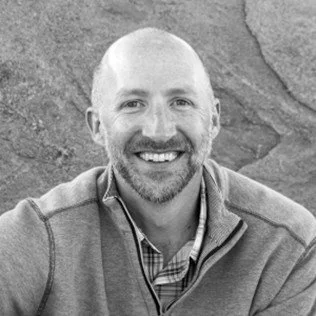
Bio: Matt is the Vice President of Wildfire Risk Analytics at Pyrologix, a Vibrant Planet company. His work has pioneered new horizons in wildfire hazard and risk assessment, incident response planning, decision support, landscape fuels strategy, and performance measurement. His research interests focus primarily on risk, systems, strategy, and decision analysis. Ultimately, he aspires to inform and catalyze actionable science to address the wildfire and climate crises with urgency and dispatch. Prior to joining Pyrologix, he spent 14 years in the Human Dimensions Program at the USDA Forest Service Rocky Mountain Research Station, where he served as a core member of the National Fire Decision Support Center and the Wildfire Risk Management Science Team.
A 34-year retrospective assessment of USFS post-fire reforestation projects in the western US: Actual versus optimal planting sites for forest recovery
Date: February 12 Time: 3:00 - 4:30 pm PST Location: Teaching and Learning Complex 1215 UC Davis or via Zoom
Presenter: Solomon Dobrowski, PhD
Abstract: We conducted a retrospective assessment (1986–2023) of USFS post-fire reforestation projects to evaluate whether historical planting patterns align with policy to close the national reforestation gap, while also assessing the potential of spatial optimization tools to strengthen that alignment. To do this, we develop a quantitative framework to prioritize reforestation based on where planting is (1) necessary to maintain forest cover (e.g. where seed limitation prevents natural recovery), (2) likely to succeed (e.g. where climate can support establishment), and (3) where its operationally feasible (e.g. proximal to roads). We then use spatial optimization to compare simulated plantings to USFS replanting projects. Whereas most sites the USFS planted after fires (61%) were in locations predicted to naturally regenerate, our simulations found sites in the same fires with lower seed availability (mean difference: 21%) and natural regeneration potential (mean difference: 22%). Our study exposes some of the trade-offs and constraints resource managers must navigate when making planting decisions and demonstrates the utility of a spatially optimized decision support framework for reforestation planning.
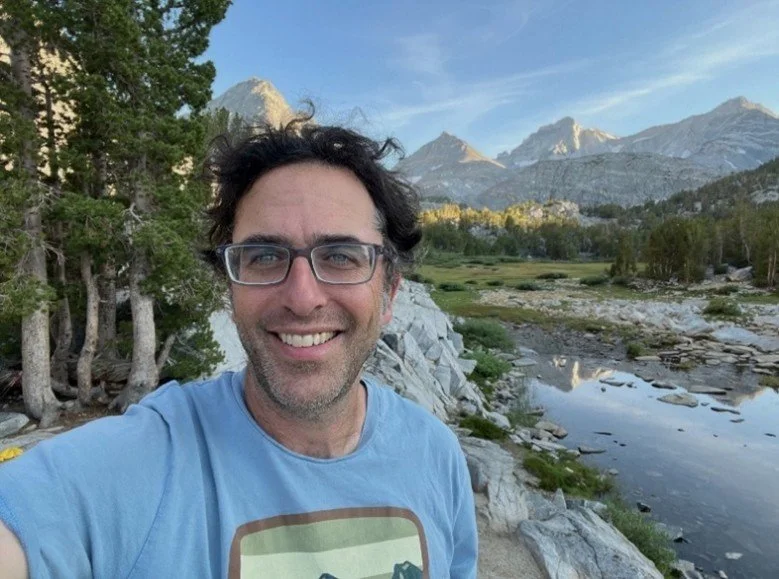
Bio: I am a professor of landscape ecology in the Department of Forest Management at the University of Montana. I study forestry, climate risks to forests, wildfire, forest regeneration, and conservation biogeography. I teach in and out of the classroom and I’m an avid fan of trees. Beyond academia, I am a Cofounder and Chief Scientist at Viridian Ecosystems where I lead applied science and analytical strategies. I also serve on the leadership team for the USGS Northwest Climate Adaptation Science Center and as a science advisor for Blue Forest. These roles put me at the intersection of scientific innovation and applied resource management.